Health and Medicine
 PUBLISHED
 1
1


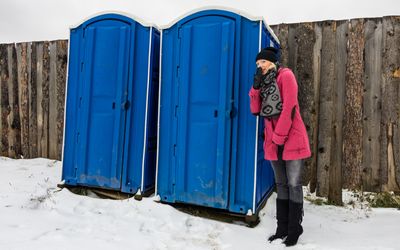


It’s something that many of us have experienced at one time or another. You head out on a winter’s day, ready to face the world… and then, seemingly out of nowhere, you need to pee. There has to be a scientific explanation for this irritating phenomenon, and we wouldn’t be IFLScience if we weren’t prepared to dig it up for you.
Why you might pee more when it's cold
According to researchers Christian Moro and Charlotte Phelps, who wrote a piece for The Conversation on this topic, there are two main reasons for more frequent bathroom visits when the mercury drops.
One is a simple matter of supply and demand – that is, the supply of fluid in the body is often higher in winter, and therefore demands to be released with greater urgency.
In the warmth of summertime, it’s easy to get dehydrated as our lifestyles tend to find us spending more time moving around outdoors, and therefore sweating. Winter, on the other hand, is more likely to see us curled up indoors with a plentiful supply of beverages, so on average we’ll find ourselves peeing more too.
The second explanation, according to Moro and Phelps, relates more to how our bodies try and protect themselves from cold temperatures.
A process called “cold diuresis” forms part of the body’s way of preserving heat to stave off hypothermia. Blood vessels near the surface of the skin constrict, drawing heat inwards towards vital internal organs. This means that the same volume of blood is now being pumped around a smaller amount of space, so blood pressure increases.
The kidneys then jump into action in response to this, filtering out all the excess fluid they can to try and normalize blood pressure – and excess fluid means extra urination. It may be super annoying, but it’s just your body doing its best to keep you alive.
According to Arkansas Urology, scientists are yet to determine a specific external temperature or length of exposure that can cause cold diuresis to strike, and it’s not clear how factors like age might play a part.
Can you do anything about it?
Most of the time, if you listen to local weather warnings and wear appropriate clothing for the conditions, spending some time outside in winter is not going to put you at real risk of hypothermia. In these cases, we can probably chalk up a sudden urge to pee as the body’s defence mechanisms being a little overzealous.
However, it is a fact that cold diuresis is one warning sign of body temperature reaching dangerously low levels. Watch out for other telltale hypothermia symptoms like confusion, sleepiness, shivering, and slurred speech, which indicate that it’s time to seek warm shelter and medical attention.
And remember, it’s still possible to get dehydrated in the wintertime, so don’t scrimp on water just to avoid running to the bathroom.
The aim, according to Moro and Phelps, is to avoid stressing the body as much as possible: “as the weather cools down, be sure to maintain a healthy lifestyle, stay warm, and don’t forget to stay hydrated, even when it’s cold.”