Space and Physics
 PUBLISHED





It’s taken a while, but people who proposed optimistic timelines for crewed missions to Mars and colonies on the Moon are starting to acknowledge these things are much harder than they claimed. Dreaming, however, is free, so as the Winter Olympics draws to a close, let’s contemplate a future sporting event beyond the bounds of Earth.
We’re not the only ones thinking along these lines. Space.com has conducted a handy survey of why Earth is really the only place in the Solar System to ski. However, not quite half of the medals awarded at the 2026 Milano-Cortina Winter Olympics for skiing exclusively, and only another eighth combine skiing with other challenges. What about all the other sports?
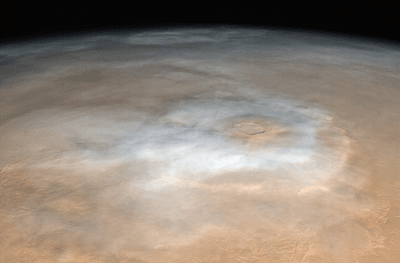
As Space.com noted, there’s no snow on the Moon to ski on, even if Apollo 17 astronaut Harrison Schmitt did say his experience cross-country skiing prepared him to move more easily over the lunar surface. Most of the ice on Mars is frozen carbon dioxide that turns to gas when warmed and hardens under pressure, neither of which create the layer of liquid that makes skiing so magical. It would at best require different skills and equipment to ski on Mars, and may well prove impossible. Pluto’s nitrogen and methane ice would be at least as challenging, and though the weaker gravity might seem like a plus, it would instead make everything more difficult.
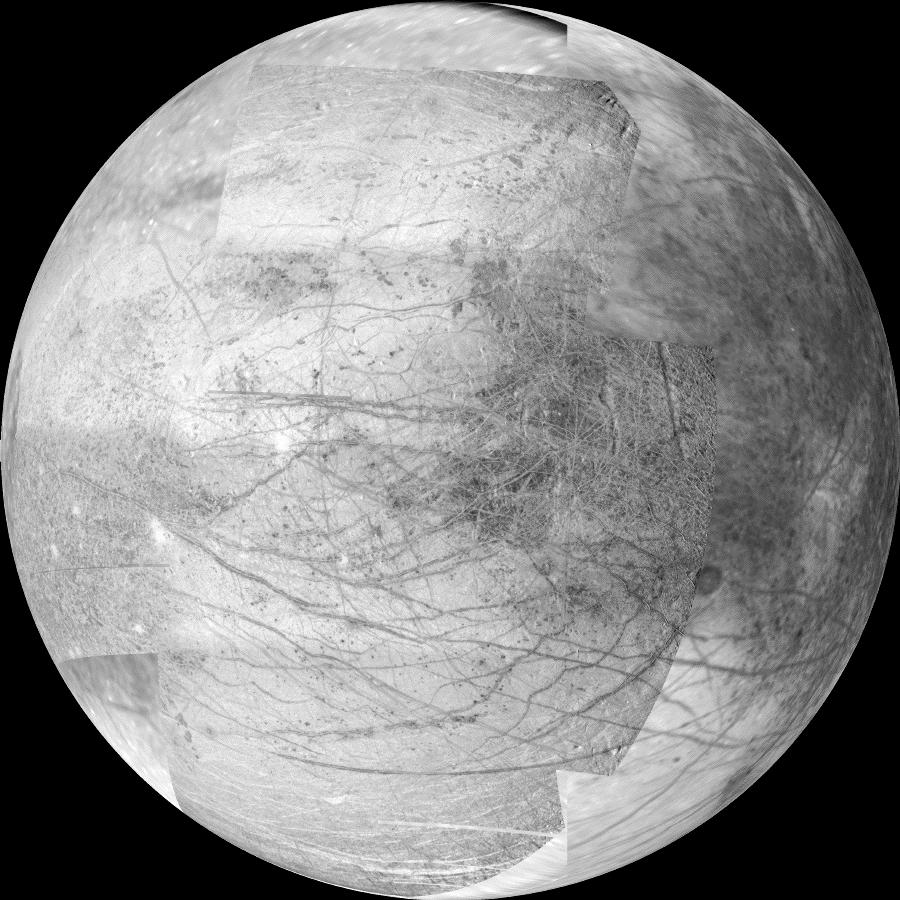
Although the surface of Europa has the right chemistry, being overwhelmingly H2O, the extreme cold makes it solid, not powdery, and the shortage of an atmosphere interferes with the lubrication Earthly skiers depend on. The situation would be even more extreme on other icy worlds. Saturn, Uranus and Neptune are even further from the Sun, making the ice even more rigid on their surrounding moons. With the exceptions of Titan and Triton, gravity is also lower, offering less opportunity to create the downward pressure needed to ski.
Sports that rely on ice, not snow, are more promising, but they would still pose challenges.
We now think that ice survives in craters at the Moon’s South Pole, which is why everyone is so keen to get there. However, there are no frozen lakes on which one could speed skate or perform triple Axel spins. It took us a long time to be aware the ice was there, not only because we have seen little of the polar regions, but because it’s mixed up with lunar dust and broken rock, also known as regolith. It’s unlikely you’d be able to go skating at the bottom of any lunar craters, although we probably won’t know for sure until we’ve done onsite investigations.
There certainly would be no prospects of natural icy slopes on which to bobsled, luge or whatever the verb for skeleton is.
On the other hand, many Olympic events are already held indoors, and this might continue on other worlds. It would be theoretically possible for a lunar colony to build an ice rink inside. The speed skating might take some getting used to, but gravity a sixth of Earth’s would make the figure skating magnificent – just think of how many spins top athletes could perform during extended jumps.
Realistically, however, lunar colonies are always likely to be severely water constrained, since what ice there is will be challenging to harvest. Skating rinks would be as exorbitant as swimming pools. As for collecting enough ice to line the side of a crater so someone can rush down it; I don’t think so. Then again, if anyone did, the low gravity might be the only way most of us would feel safe getting on a luge.
The same goes for Mars colonies, where dry (carbon dioxide) ice may be easily available, at least near the poles, but water ice will be precious and scarce. It won’t be pure enough to skate on outdoors, or abundant enough to do it inside a dome. Technically, Mercury has ice at its poles as well, but we very much doubt it's skateable.
Out on the gas giants’ moons, things are different. Io and Titan aside, water ice is abundant. If we ever establish colonies on these worlds, it’s likely ice skating will be a popular indoor event. People could even build snow machines and put a lid on craters, turning the slopes into ski fields, removing the temperature and atmosphere impediments without changing the gravity.
With such low gravity (Ganymede has the strongest pull of these worlds and it is still only a seventh of Earth’s) sporting events would feel very different. As noted, skating in low gravity would allow routines that would make Earthly events pale in comparison. Downhill skiing, on the other hand might lose a lot of its appeal when one is drawn downwards so much more slowly. If you could build a protective roof big enough, ski jumping might be amazing, however, as each jump would end in a fall so slow it would seem endless.
As mentioned earlier, though, a harder question to answer is whether it would be possible to ski or slide outdoors on these icy moons. The extreme cold and lack of atmosphere would hinder the creation of the lubricating layer of water between blade and ice. Changes of just 3°C (5°F) cause differences between the way skaters move, with rinks for figure skaters and ice hockey tuned to the most suitable temperatures for their sports. Europa’s -170°C (-270°F) would be very unsuitable without technological modifications.
The colder it gets, the more pressure is required to melt the ice beneath skates, and low gravity makes that pressure harder to apply. The fact anyone outside the colony on these moons would need to wear heavy space suits would add a little pressure, but not nearly enough on its own. However, sharper and shorter blades distribute the same forces over a smaller area, which would increase the pressure. Could ice skates be engineered enough to allow skating on Europa? We wouldn’t rule it out, but it’s very unlikely a pair designed for Earthly conditions would do the job.
A few other sports need consideration. Biathlons can be considered under skiing. Whatever the challenges of firing a gun in low gravity, beyond the Earth the skiing would be the hard part.
This Olympics has included skimo for the first time. As it currently operates, this combination of skiing and mountaineering looks ill-suited to any known world beyond the Earth. It might be possible to adapt, however. On Mars, or Ganymede, it’s possible to imagine competitors struggling up rocky slopes and cascading down the other side on a mix of ice and regolith, counting on the low gravity and spacesuits to save their bones from their own stupidity.
A heavier puck might be adopted for ice hockey on outer moons to balance the lower gravity, otherwise it would spend a lot more time airborne, which might be a bit strange, but wouldn’t prevent a contest. Otherwise, the same rules would apply as for other skating events.
Given only one place on Earth is considered to have suitable geology to make curling stones, finding an off-world source would be quite important. On the other hand, since we still haven’t come to grips with the physics-defying behavior of curling-stones after a century, taking them to low gravity could be worth it for research purposes alone.