Space and Physics
 PUBLISHED



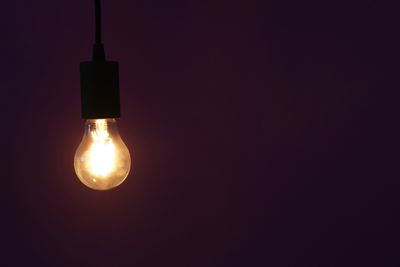


Imagine you are sitting in a room with no windows, and the lights are on. You flip the switch, and seemingly instantly the light disappears from the room, plunging you into darkness. So... where did all the photons of light go?
This might sound like a bit of a basic question, but odds are it'll be one you will be asked by a child in your life at some point. And there are folk out there on the internet asking for help to answer it. So, let's get into it.
What is light?
First of all, we might just want a quick recap on what exactly light is. Light is a form of electromagnetic radiation that can be detected by the eyes. It is formed of tiny particles called photons, which by and large move in straight lines, although more technically acts as both a particle and wave.
We see things because these little photons are flooding the room, hitting the objects, and being bounced back into our eyeballs where they're detected by neurons and sent to the brain to form an image. Simple.
So, if we're talking about a light bulb, it's best to remember that these are not devices that store light.
Old-fashioned light bulbs, for example, contain a filament, which heats up when electricity is passed through it until it begins emitting visible light. Turn the light off and it is no longer hot enough to heat the filament, meaning the light bulb stops emitting light and goes dark.
But what about the photons which are already bouncing about the room? Where do they go?
Where does it go?
The answer to this is deceptively simple. All you really need to know is that the light simply gets absorbed by materials in the surroundings, which you likely already understand if you have been taught about how color works.
When the light is on, photons are hitting the surfaces of objects and are either absorbed, reflected, reemitted, or transmitted.
Let's talk about absorption and reflection, as they're most relevant to the question. Objects absorb light in certain wavelengths, whilst reflecting light of different wavelengths. This is why we have color as a red ball, for example, looks red because that is the wavelength of light which is reflected off the ball while it is absorbing all other wavelengths, which are turned into another form of energy, largely thermal.
Everybody knows the speed of light is incredibly fast, clocking in at the impressive 299,792,458 m/s, if you insist on writing it long hand.
Essentially, then, when you turn the light off the last light emitted by the bulb zips around the room at this incredible speed, colliding with surfaces where it is either reflected or absorbed.
This continues at a pace you couldn't possibly hope to notice, until eventually all the light has been absorbed by the objects around you.
Filling rooms with radiation
But, as mentioned, this energy doesn't disappear but is converted into tiny amounts of heat in the objects the light collided with. These objects, for example the walls, then reemit light in the infrared spectrum as their molecules jiggle about with the energy from the light they absorbed.
This will not be light that you can see, however, and the result is that you are plunged into instant darkness when you flip the switch.
The room didn't go dark, it's just instead filled with harmless radiation you can't see, which is much more reassuring to those who are scared of the night.