Culture and Society
 PUBLISHED
 3
3


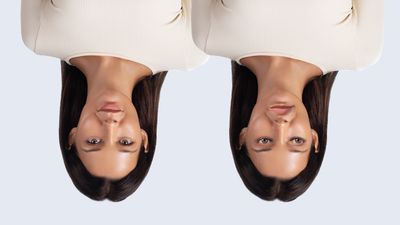


In 1980, Professor Peter Thompson, a psychologist at the University of York, introduced an uncanny phenomenon that easily perplexes anyone who is unfamiliar with it. Thompson provided two photos of Margaret Thatcher, the then British Prime Minister, that were presented upside-down. At a casual glance, you can easily believe the two faces are the same, but it’s only when you flip them right-side-up that you discover just how wrong you were.
For anyone who wants to try this, here are some examples we’ve provided below. Once you know what you’re looking for, it does become easier to spot the subtle changes in the altered image. But note that the terrifying distortion practically disappears when you view the photos upside-down again, even when you know what’s going on.
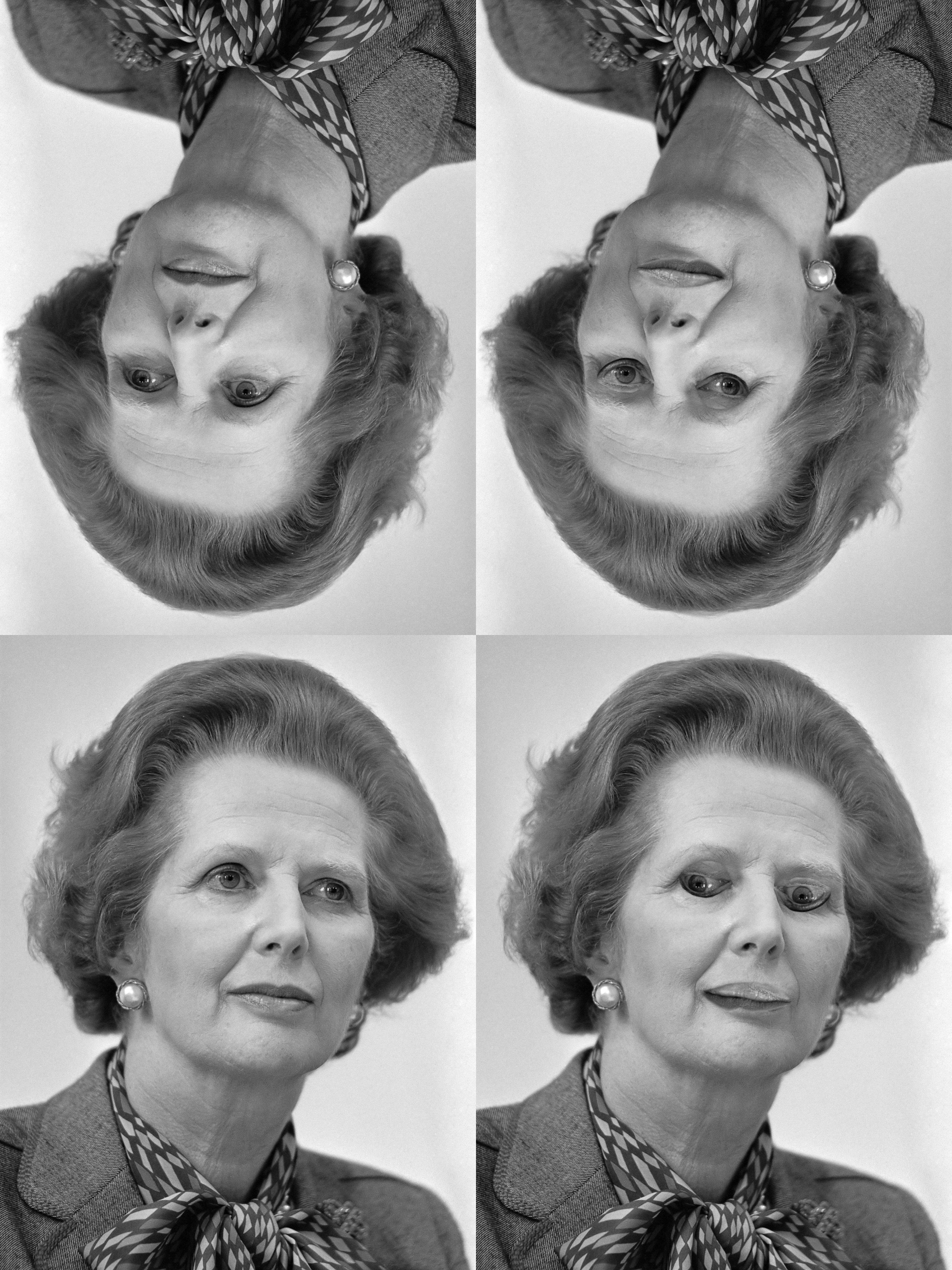
This lady is (partially) for turning?
The Thatcher Effect, as the phenomenon is now known (sometimes called the Thatcher Illusion), was designed to demonstrate the fundamental ways our brains process faces. In essence, the human brain has evolved to recognize faces holistically (as a whole), rather than as isolated features.
But when a face is inverted, our configural processing – the cognitive mechanism that perceives the spatial relationship, proportions, and distances between objects (e.g. facial features) rather than just the individual parts alone – breaks down. This forces us to switch to featural processing, which focuses on identifying individual, isolated components. This process is essential for recognizing blurry or unfamiliar stimuli, but it is generally less efficient than holistic processing for faces.

So, when this kicks in, our ability to recognize localized changes in an inverted face becomes impaired. Instead of looking at the spatial arrangement of features on the face, our brains just look for things we would expect a face to have. In this way, it looks at the upside-down face and goes “does it have eyes?”, “does it have a mouth?”, “is there a nose?”.
Because the photo does indeed contain all these features, regardless of whether or not they are the right way up, our brain gives it the green flag even though some may not be oriented correctly (what experts refer to as Thatcherization).
This whole process – the switch from holistic/configural processing to featural processing – takes place in part of the brain known as the Fusiform Face Area (FFA). This part of the brain is specialized for dealing with upright faces. But when the face is inverted, the FFA passes the process off to more general object recognition areas that are not tuned to detect things we would recognize as uncanny in faces.
Although the Thatcher Effect may seem like a quirky illusion, it provides deep insights into our evolution (and that of monkeys). It shows that facial recognition is a specific form of visual processing that is separate from processes that recognize other objects, like chairs or houses or refrigerator magnets. It has also helped researchers explore how conditions like prosopagnosia may work.