Nature
 PUBLISHED



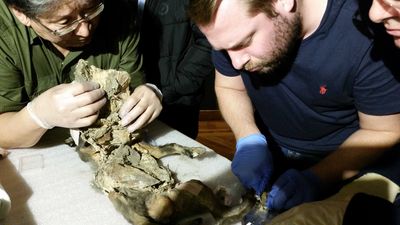


Analysis of the genome of a 14,400-year-old woolly rhinoceros (Coelodonta antiquitatis), recovered from the stomach of an ancient wolf, shows the species probably died out very quickly alongside a dramatic shift in climate.
This is the first time the genome of an entire Ice Age animal has been sequenced from a tissue sample found inside another animal’s stomach, a feat made even more impressive considering that − even at the best of times − ancient DNA is notoriously fragmented and difficult to work with.
This sample is especially notable because it comes from a rhino that lived just before the species vanishes from the fossil record, giving a rare insight into the state of woolly rhinos’ genetics just before they went extinct around 14,000 years ago.
“It was really exciting, but also very challenging, to extract a complete genome from such an unusual sample,” said Sólveig Guðjónsdóttir at Stockholm University, the study’s lead author, in a statement.
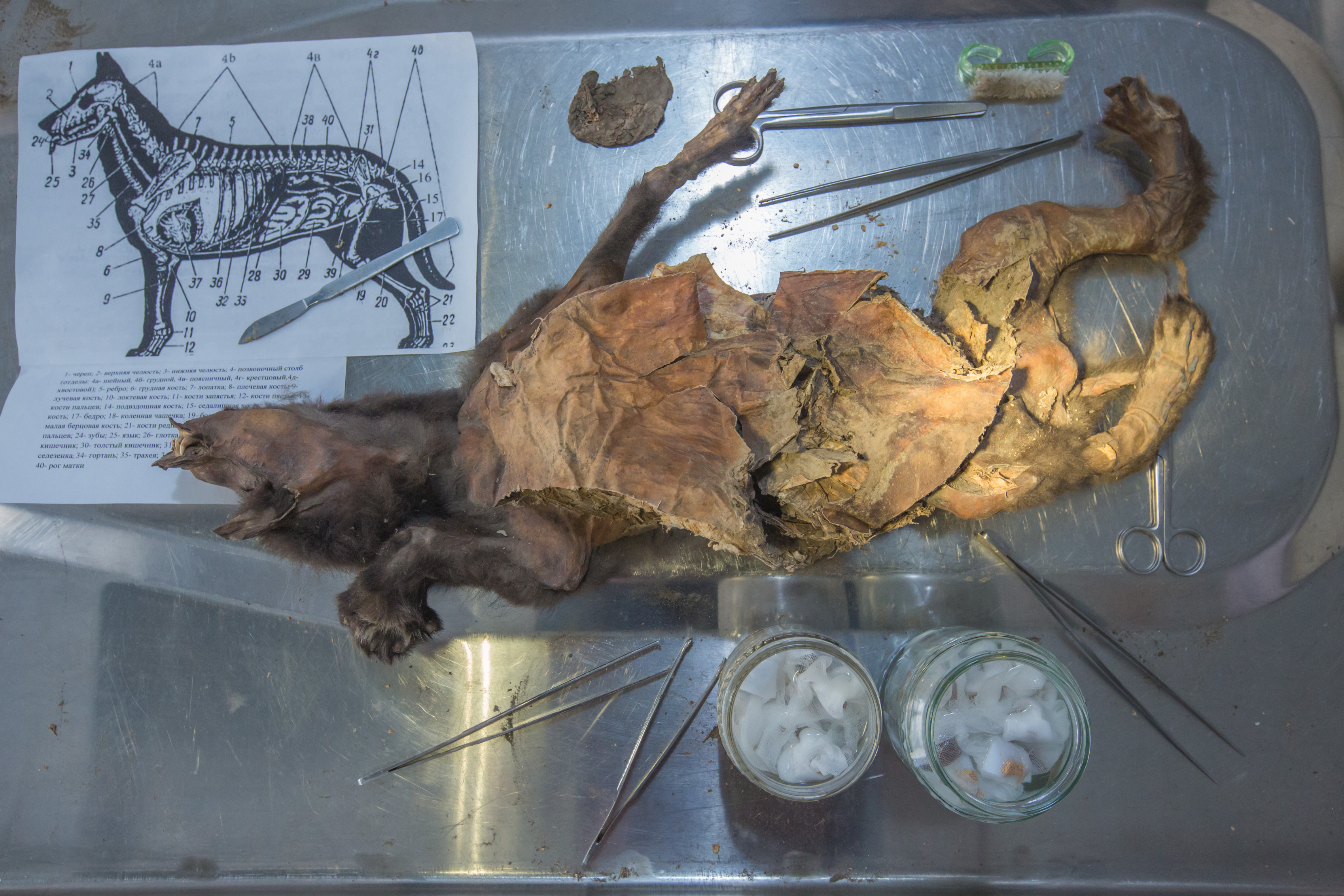
The wolf pup, named Tumat-1 after the village in northeastern Siberia near which it was found by mammoth ivory hunters, is one of a pair that were the subject of a major paper published last June. It would have been around 9 weeks old when it died. Its death is likely to have been swift, perhaps caused by a den collapse, since the stomach contents remained undigested.
When researchers opened the pup’s stomach, they saw a 3-centimeter-long piece of tissue that still had remnants of blonde fur attached.
“So at first they were suspecting that it could have been a cave lion […] But also it is very common that cubs of animals like the woolly rhinoceros or the woolly mammoth would look a bit blonder,” study author Camilo Chacón-Duque at Uppsala University in Sweden told IFLScience. “So in the end, they were like, ‘we need to do some genetics on this’.”
Based on genetic analysis of just a small amount of DNA, an earlier study was able to identify that the tissue did indeed belong to a woolly rhino.
Now Chacón-Duque and Guðjónsdóttir’s team has sequenced the animal’s full genome to a high resolution and compared it with two other high-quality genomes from older specimens, dated to around 18,000 and 49,000 years ago, respectively.
These comparisons allowed the team to examine how genome diversity, inbreeding levels, and the number of harmful mutations changed in the run-up to the species’ extinction.
They found that woolly rhinos had yet to undergo significant genetic deterioration by 14,400 years ago, indicating that the species probably maintained a stable and relatively large population until just before it died out.
There is a debate over whether Pleistocene megafauna, including species such as the woolly rhino, the woolly mammoth, and the cave bear, were wiped out by humans – known as the overkill hypothesis – or if they succumbed to climatic shifts instead.
This research suggests that, at least for the woolly rhino, climate change is the more likely culprit.
It just seems a bit unlikely that human pressures like hunting or even habitat alteration, fragmentation, destruction would have been the key element to decide the final demise of the species.
Camilo Chacón-Duque
“There were human settlements in Siberia 15,000 years before the extinction of the species. And these settlements were always low-density because the harsh climate conditions don't allow for large human populations to thrive, even now,” said Chacón-Duque.
“So, for us, it just seems a bit unlikely that human pressures like hunting or even habitat alteration, fragmentation, destruction would have been the key element to decide the final demise of the species.”
But the timing of the extinction does align with a dramatic climatic shift called the Bølling–Allerød Interstadial, which saw rapid warming in the northern hemisphere between 14,680 and 12,890 years ago.
“Woolly rhinos were very specialized in certain habitats and weren’t very good at just dispersing easily and moving around,” said Chacón-Duque.
“During the Late Pleistocene, there were already other moments where the distribution range of the species was shrinking, shrinking, shrinking. And by the moment they went extinct they were only present in Northeast Siberia.”
The study is published in Genome Biology and Evolution.