Space and Physics
 PUBLISHED



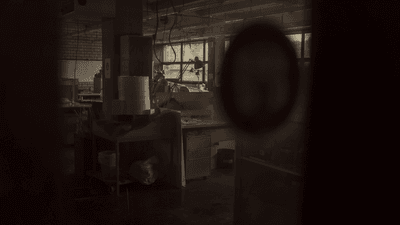


It’s something of a conundrum for a scientist when they're asked about ghosts. There is a science to explaining why people believe in them, of course. Professor Chris French has built a career out of exactly that. But what do you do when the ghost is in your own lab?
This is the story of Vic Tandy, an engineer and computer scientist whose lab was reported as "haunted" back in 1998. The late 90s were an era of technological innovation. The Dot-com Bubble had yet to burst and Bill Gates was still boogying to Start Me Up. Somewhat embarrassing, then, to find your lab embroiled in something as outdated as a haunting.
Much of French’s work points to how a person’s cognitive biases can prime them to interpret events and occurrences as evidence of the paranormal. A person’s expectations may explain why ghosts are always in Victorian dress and not, say, a tracksuit and a pair of Converse, and a belief in the paranormal is a strong predictor of seeing a ghost. So, it makes you sit up a bit when you hear a haunting is happening to a person of science.
Tandy was one of several scientists working in the medical equipment laboratory when the hauntings began. One worker ran from the building after seeing something inside the lab. Another reported feelings of depression and chills, and someone else was speaking to Tandy, whom they perceived as standing next to them, only to realize he was on the other side of the room.
The spooky goings on were dismissed as just a quirk of working around equipment. Merely the whirring machines, Tandy told himself, but then the strange things started happening to him.
He was alone in the lab when he first felt it. That wash of depression his colleague had described, a feeling grim enough to make sweat gather on his skin. The room seemed to groan and creak around him, but he ignored it and continued working.
Then came the visual disturbances. Just out of the corner of his eye at first, as if someone were watching him while he worked. The sense of being watched grew so strong that, with some resistance, he turned to face the mysterious figure only for them to disappear before his eyes.
“It would not be unreasonable to suggest I was terrified," he said of the experience.
Spooky, huh? Tandy thought so too, and so he did what any good scientist would and wrote a report to explain it.
“The Ghost In The Machine” was the subsequent paper, detailing what its authors describe as “an as yet undocumented natural cause for some cases of ostensible haunting.” It lists the many boring reasons a perfectly boring house could appear haunted even to a skeptic. Think gurgling pipes and creaking floorboards. It’s only sensible, then, to seek out earthly events that could explain your personal haunting, which is precisely what Tandy did.
At the time of his haunting, Tandy checked several gas bottles to make sure a leak wasn’t behind his symptoms. He found none, so went home on the assumption that he was over tired.
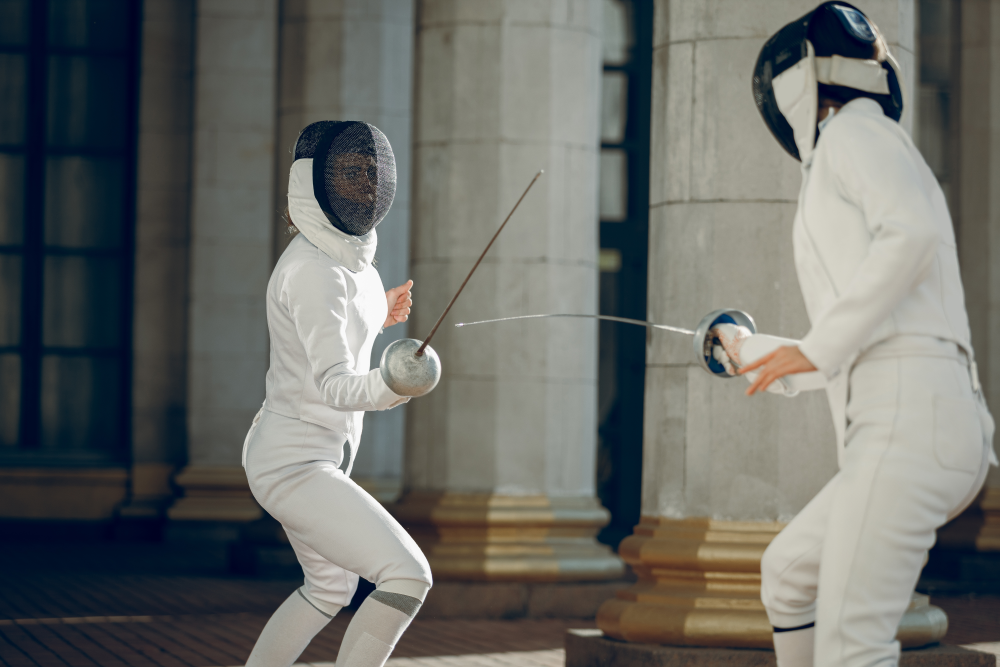
The next day it was business as usual because Tandy had a fencing competition to get to. He had a spare blade that needed adjusting so he could attach a handle. Figuring it would be an easier job clamped into one of the workshop's vices, he took it to the lab for a quick fix.
He left the blade unattended briefly, and when he returned it was “frantically vibrating up and down”. This gave his human brain a fright, but then his scientific one kicked in.
If the blade was moving, it was receiving some kind of energy that Tandy could not see or hear, but there are sounds inaudible to the human ear. To investigate where the source might be, he set up the blade so it could be moved across the room and noted how the vibration got bigger about halfway across before petering out.
Tandy realized this was evidence of a standing wave of infrasound – essentially a hum too low to be heard. The sound’s frequency happened to match the dimensions of the room, so the waves bounced back and forth off the walls instead of fading away. Because the reflected waves overlapped while travelling in opposite directions, they reinforced each other and created a standing wave: a fixed pattern of intense vibration that was strongest in the middle of the room.
What this meant in practice was that as you moved through the room, you went from an area of no vibration, to maximum vibration, and then low vibration again. And the source of that infrasound? An extraction fan. The frequency – 19 Hz – was also critical to the haunting because although it’s too low to be heard, it's still sufficient energy to have a physical effect on the body.
Tandy found a book that listed symptoms associated with a similar frequency that had been affecting workers at a factory. It said disturbance of the eyes and other organs can create visual distortions in the periphery, shivering and sweating, altered heart rate, and feelings of depression and dread.
Just as French described, Tandy's "terror" that night alone in the lab was partly the result of being primed to misread natural phenomena (See above for a podcast interview with French about the psychology of the paranormal). Had he not been told by several colleagues that there was something spooky going on, he might have interpreted the strange feelings for what they were: symptoms. Instead, even if it was only briefly, his mind drifted to shadowy figures capable of disappearing without a trace.
In a way, the haunting was real, it just wasn’t caused by phantoms. The scientists were being haunted by the physics of infrasound, which is arguably cooler and definitely easier to exorcise.