Humans
 PUBLISHED
 1
1



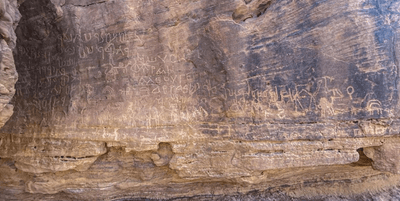


For many thousands of years, people returned again and again to this remote desert outcrop, leaving their marks across its stone walls. It’s unclear why this site became so prolifically adorned in illustrations, but the evidence of human activity over long periods of history suggests it held deep and lasting significance for many different cultures.
The site lies in a stark stretch of desert in South Sinai about 5 kilometres (3 miles) northeast of the ruins of the Serabit el-Khadim, an ancient Egyptian city famous for its turquoise mines. Today, this is Egypt’s least populated region, so it’s easy to assume it has always been a barren landscape, devoid of life. However, the area has been inhabited since prehistoric times. The earliest written records date to around 3000 BCE, when ancient Egyptians documented expeditions into Sinai in search of copper and turquoise.
The rock art gallery was recently discovered by an archaeological mission led by the Supreme Council of Antiquities, part of the Egyptian Ministry of Tourism and Antiquities. Known as the Umm Arak Plateau, the site consists of a large plateau located in a strategic position overlooking a huge open plain that stretches north toward the Jebel el-Tih plateau. This vantage point suggests it may have served for centuries as both a lookout and a gathering place where weary travellers stopped to meet and rest.
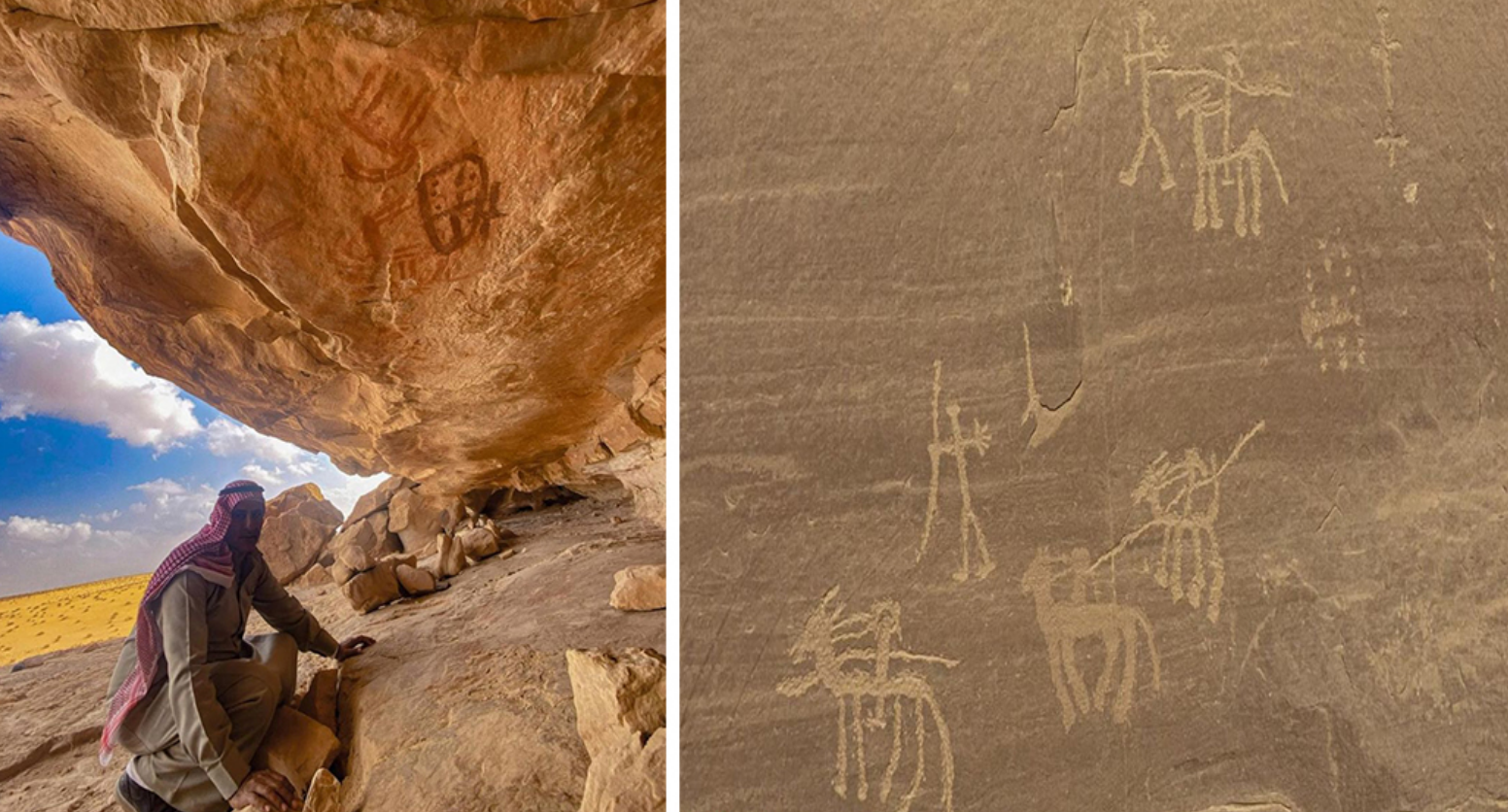
Under a rock shelter on the eastern flank of the plateau, archaeologists discovered a remarkable collection of ancient imagery created over vast stretches of time; some painted in vivid red and grey pigment, others finely engraved into the stone.
The oldest of the artworks, "tentatively dated" to between 10,000 and 5,500 BCE, depict scenes of humans using dogs to hunt ibex, as well as other wild animals native to the region. Another burst of artistic activity appears to have occurred much later, beginning in the Middle Kingdom (2040–1650 BCE) and continuing through the Roman period into the 3rd century CE.
One section of the shelter portrays camels and horses ridden by armed figures. This scene may document episodes of war or passing conquerors. Alternatively, the ancient artists may be flexing their clan's strength, as if to warn others: “You want some of this?!”
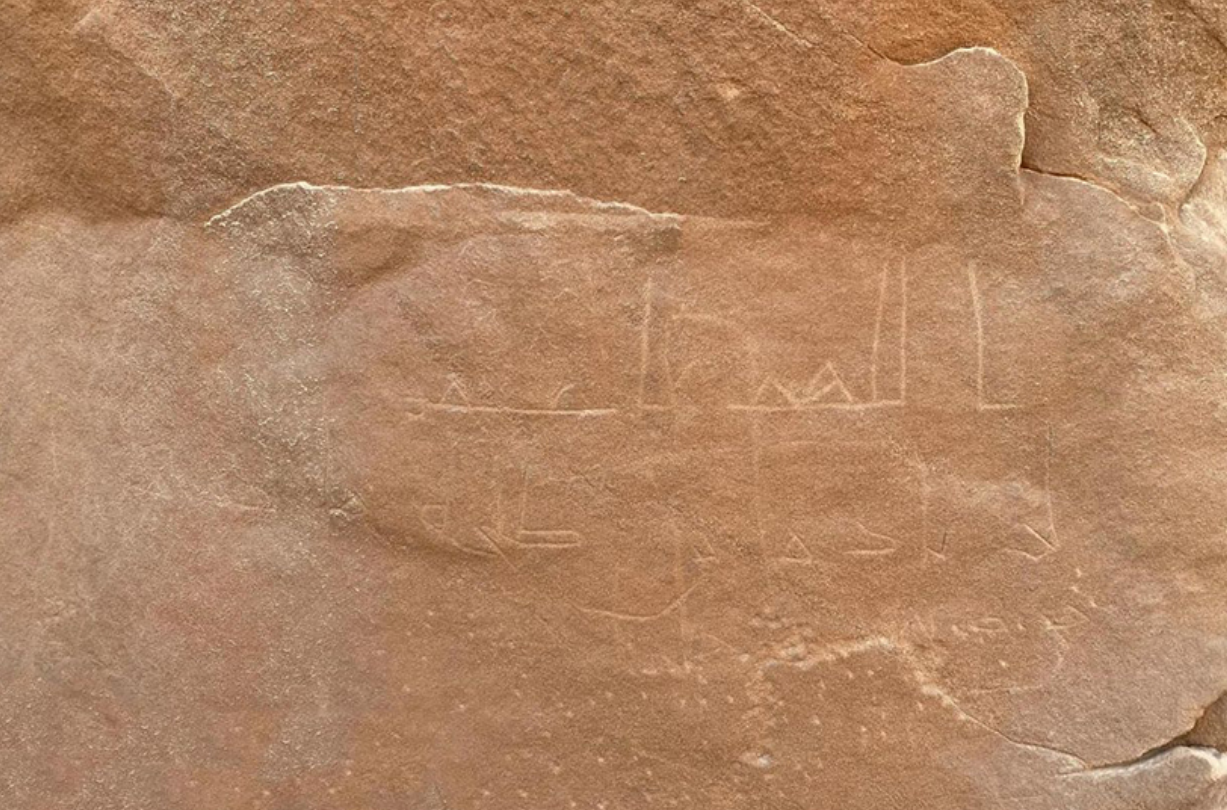
The inscriptions appear in markedly different styles. Some are written in Nabataean Aramaic, the language of the ancient Arab people who flourished in the region between the 4th century BCE and 106 CE and are best known for their monumental architecture at sites such as Petra in modern-day Jordan, which sits close to the Sinai Peninsula. Other inscriptions are in Arabic, indicating that the shelter continued to be used into the early Islamic period (after 600 CE) and beyond.
Back in 2020, another impressive collection of rock art was discovered in this part of the Sinai Peninsula, around 60 kilometres (38 miles) southeast of Sarabit el-Khadem, underscoring the region’s archaeological richness. This one, too, had a ripe old age of 10,000 years.
Rock art is often associated with the painted caves of Europe, such as Lascaux in southwestern France, but a stream of recent archaeological evidence is showing that the Arabian Desert is another hotspot of ancient and prehistoric human artwork. With the attention of archaeologists now honed on this part of the world, it's likely that even more discoveries will come to light in the years ahead.