


 Health and Medicine
 PUBLISHED


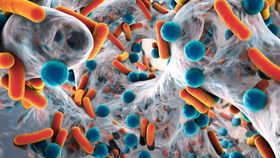


The moment public health experts have been warning about for years has reached the United States, with the reporting of a urinary tract infection resistant to all known antibiotics. The gift given to humanity by the collaboration between a fungus and groundbreaking scientists is well on the way to being squandered.
On Thursday researchers from the Walter Reed National Medical Center reported in the journal Antibacterial Agents and Chemotherapy on the case of a Pennsylvania woman with a urinary tract infection that has the mcr-1 gene, which provides resistance to colistin, the antibiotic reserved for infections resistant to all other known antibiotics.
Even more alarmingly for Americans, the woman in question had not been outside the US in the previous five months, demonstrating that the resistant bacteria was transmitted there and may have already become widespread.
When Alexander Fleming noticed something odd about a petri dish of Staphylococcus aureus in 1928, life expectancy in even the wealthiest countries was less than 60 years. The fact that it is now more than 70 worldwide is, in no small part, a result of his discovery. The perseverance of Howard Florey turned penicillin into a treatment for such once-fatal diseases as wound tuberculosis and common wound infections and inspired a host of alternative drugs.
For several decades however, lethal bacteria have been evolving resistance faster than we have been developing new drugs to control them. Two years ago the World Health Organization reported that 20 percent of tuberculosis cases were resistant to multiple antibiotic classes. Last year a bacteria resistant to “last line of defense” antibiotics was observed in China.
Director of the Centers for Disease Control and Prevention, Dr. Tom Frieden, gave a talk Thursday at the National Press Club on the threat from the Zika virus. Because one potential disease catastrophe is not enough, Frieden drew attention to that day's announcement. “We risk being in a post-antibiotic world... that could be for the 600,000 Americans a year who need cancer treatment for whom we just assume we'll be able to treat infections,” he said. “We may lose that ability.”
Frieden described colistin as the “last one left for what I call nightmare bacteria.” He noted that the researchers had done, “just three weeks of testing” to find the case of colistin resistance, indicating it may be disturbingly common. “We could lose these drugs if we don't act quickly,” he said.
Fighting antibiotic resistance must be done on two fronts for it to be successful. On the one hand greater investment is required to find drug treatments, either through modification of existing classes of drugs, or by bringing radically new alternatives to market.
The second approach, emphasized by numerous experts in response to the news, is to extend the life of existing drugs by only using them when necessary, thoroughly washing hands and foods, and restricting the provision of antibiotics to livestock.


 8
8