Space and Physics
 PUBLISHED
 2
2



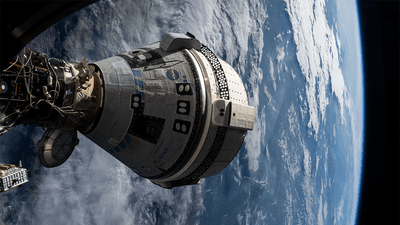


NASA has reviewed the infamous Starliner incident that saw astronauts Sunita "Suni" Williams and Barry "Butch" Wilmore stuck on the International Space Station for 278 days longer than intended. According to the new report, the organization places the "anomalies" in the same category as the Challenger and Columbia disasters.
On 5 June 2024, Wilmore and Williams were launched into space for an eight-day-long mission on board the orbiting laboratory. The two US astronauts were flying onboard Boeing's Starliner spacecraft, the third test of the new vehicle, which was supposed to demonstrate its safety for shuttling astronauts to and from the ISS. But that part didn't go so well.
Before they had docked with the ISS, the crew took over control of the spacecraft for an hour of flight demonstrations. The spacecraft performed well, but the following day saw several troubling anomalies.
"And then we got into day 2. The start of day 2 was the same starting off, and then we did have some failures as we are all aware. We lost an RCS jet, then we lost another one. And then you could tell the thrust, the control, the capability was degraded. The handling qualities were not the same," Wilmore said from the ISS in June 2024.
"From that point on you could tell that the thrust was degraded," Wilmore added. "At the time we didn't know why."
Starliner docked safely with the ISS, and Williams and Wilmore climbed on board what would turn out to be their home for the next nine months. NASA and the astronauts aboard the space station attempted to figure out the issue while the spaceship was still docked, but eventually Starliner returned to Earth without a crew.
In a new report and press conference, NASA revealed that it considers the incident a "Type A" mishap. This is the most serious category of incidents outlined by the agency.
“The Boeing Starliner spacecraft has faced challenges throughout its uncrewed and most recent crewed missions. While Boeing built Starliner, NASA accepted it and launched two astronauts to space. The technical difficulties encountered during docking with the International Space Station were very apparent,” NASA Administrator Jared Isaacman said in a statement.
“To undertake missions that change the world, we must be transparent about both our successes and our shortcomings. We have to own our mistakes and ensure they never happen again. Beyond technical issues, it is clear that NASA permitted overarching programmatic objectives of having two providers capable of transporting astronauts to-and-from orbit, influence engineering and operational decisions, especially during and immediately after the mission. We are correcting those mistakes. Today, we are formally declaring a Type A mishap and ensuring leadership accountability so situations like this never reoccur. We look forward to working with Boeing as both organizations implement corrective actions and return Starliner to flight only when ready.”
To qualify as a Type A mishap, an incident must result in mission failure, the loss of crew or a spacecraft hull, or "unexpected aircraft or spacecraft departure from controlled flight for all aircraft except when departure from controlled flight has been pre-briefed".
"This was a really challenging event," associate administrator of NASA, Amit Kshatriya, said during the press conference. "We almost did have a really terrible day."
NASA revealed that while en route to the ISS, several thrusters failed, leaving the crew without "six degrees of freedom" or the ability to control the craft's orientation and direction.
"During the rendezvous and proximity operations, propulsion anomalies cascaded into multiple thruster failures and a temporary loss of six degree of freedom control," NASA Administrator Jared Isaacman explained.
"Now, the controllers and the crew performed with extraordinary professionalism. Flight rules were appropriately challenged, control was recovered, and docking was achieved. It is worth restating," he added. "What should be obvious at that moment had different decisions been made, had thrusters not been recovered, or had docking been unsuccessful, the outcome of this mission could have been very, very different."
Ultimately, NASA acknowledges that there were problems in prior tests of Starliner that weren't properly understood before the crewed mission.
"A mission elapsed timing error prevented the guidance software from calculating orbital insertion burn timing, which triggered excessive thruster firings, incorrect orbital insertion, major propellant use, and ten thrusters that were declared failed off," Isaacman explained of the first orbital flight test in December 2019. "This mission was declared a high visibility close call."
Commercial Crew accepted risks in the [Service Module] propulsion system and the [Crew Module] propulsion system that were not fully understood prior to [Crewed Flight Test]," the report concludes. "These risks included variances to requirements and unexplained anomalies from the previous flight tests. There were no unstated technical concerns among the NASA team during the commit to flight process, but there was a shared underestimation of the likelihood of future thruster failures."
Ultimately, the report concludes that there are issues that need to be addressed and thoroughly tested with Starliner before it is allowed to fly again.
"Starliner has design and engineering deficiencies that must be corrected, but the most troubling failure revealed by this investigation is not hardware," Isaacman added in a letter to NASA colleagues. It is decision making and leadership that, if left unchecked, could create a culture incompatible with human spaceflight."
"Even with our best efforts and programs, like [Commercial Crew Program], that have seen great success, mistakes will occur,” he added. “What defines us is whether we learn from them, improve because of them, and strengthen confidence across this workforce and the nation we serve. That requires transparency and accountability, neither of which can be selectively applied."
It's unclear how much opportunity Boeing will have to ferry further crew to the station with Starliner, given that the ISS is currently due to crash down into Point Nemo in the Pacific Ocean in 2031 (assuming we don't turn it into a space museum). But if they can sort out the issues, there may be opportunities to use the spacecraft beyond the end of the ISS. At the moment, further investigations into the cause of its problems continue.