Humans
 PUBLISHED



This week, bats are discovered to be tiny rockstars using their larynx in a similar way to death metal singers, a quantum computer has produced the first simulation of a wormhole, and we ask why people are still on the hunt for the very-not-lost city of Atlantis?
Groundbreaking HIV Vaccine Shows Success In Phase 1 Clinical Trial In Humans
Researchers report the positive results from a Phase 1 clinical trial focused on a vaccine against HIV. One of the goals in the creation of a vaccine is to find a formula that would indue the so-called broadly neutralizing antibodies (bnAb), an immune response that can step up to the challenge. The new trial shows that this vaccine can induce the bnAb precursors. Read the full story here.
Bats Use Death Metal Growls To Communicate
Death metal fans just got a new mascot, as it’s been revealed that bats can vibrate folds in their larynx in a way similar to death metal singers to make sounds. Exactly what these roars are meant to communicate isn’t yet clear, but it demonstrates the vast range of these animals who are better known for their ultrasonic echolocation. Read the full story here.
A Wormhole Has Been Simulated With A Quantum Computer
Scientists have performed the first quantum “simulation” of a holographic wormhole using a quantum processor. They did not create a tunnel through space and time, unfortunately, but they were able to create a quantum setup that behaves just like a particle traveling through a wormhole. This approach could be invaluable in surpassing the current limits of physics. Read the full story here.
Man Found Alive More Than 15 Hours After Falling From A Cruise Ship
Falling from a cruise ship is something you might expect to be a fatal accident, and it seems even less likely that you could then survive being lost at sea overnight. In what’s being reported as a “Thanksgiving miracle”, a man cruising in the Gulf of Mexico has done just that as he was pulled from the water alive despite rescuers estimating that he was lost at sea for over 15 hours. Read the full story here.
Newly Discovered Tyrannosaur Could Be The Missing Link In T. Rex’s Ancestry
A new species of tyrannosaur, Daspletosaurus wilsoni, could bridge the gap between the early and late dominant predators of Cretaceous Laurasia, revealing a straightforward family tree. The newly published description of D. wilsoni combines features of early tyrannosaurs with those of their more famous descendants. Read the full story here.
Feature of the week:
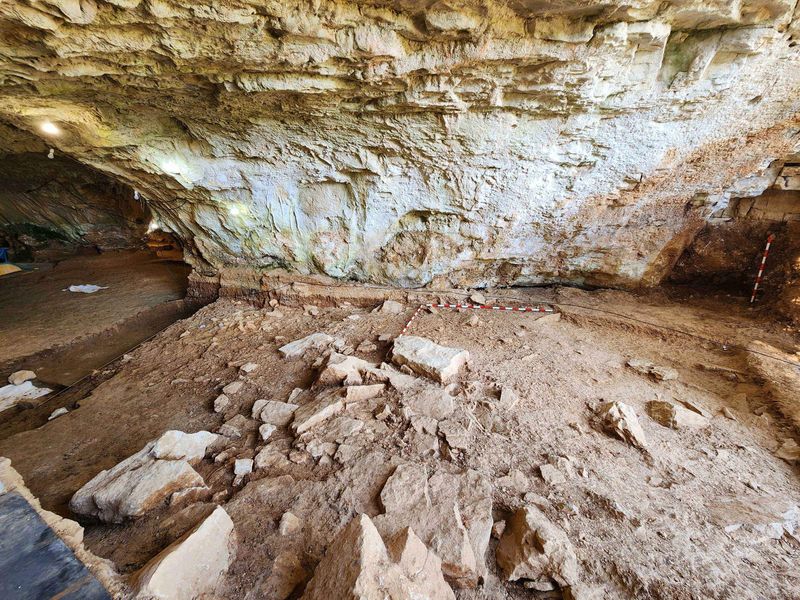
Why Archaeologists Are Not Looking For Atlantis
Atlantis never existed. Yes, we know this. No, it’s not a mystery. So, why do people (science-inclined people included) insist on searching for the mystical – but crucially, not mythical – “lost” city? Read the full story here.