Humans
 PUBLISHED


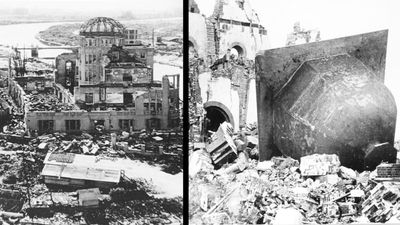


When the first atomic bomb was dropped on Hiroshima, Japan, on August 6, 1945, the world saw the nuclear age come into being in terrible brilliance. Over 140,000 people were killed by the explosion and its aftermath. Then, three days later, the second bomb was dropped on Nagasaki, claiming between 60,000 and 80,000 more lives.
The events of either day would have been terrifying for anyone who witnessed them, but can you imagine being present for both?
Tsutomu Yamaguchi was such a person. When the Enola Gay, an American B-29 bomber, was preparing to drop the atomic bomb on Hiroshima, Tsutomu – aged 29 at the time – was wrapping up the end of a long business trip in the city. Apparently, he was heading back to the office to pick up his ID stamp that he’d accidentally forgotten. As he made his way along the road, he noticed an airplane in the sky.
The Enola Gay was carrying an atomic bomb created by the Manhattan Project. Named “Little Boy,” the bomb contained 64 kilograms (141 pounds) of enriched uranium and could produce an explosive yield equivalent to approximately 15 thousand tons of TNT (15 kilotons).
When the bomb exploded around 579 meters (1,900 feet) above the city, the blast and thermal radiation caused devastation across Hiroshima. An estimate by the Radiation Effects Research Foundation (RERF) concludes that between 90,000 and 166,000 had died by the end of the year. But Tsutomu survived.
Following the explosion, bewildered and confused like so many others, Tsutomu spent the night in an air raid shelter before carrying on his journey home. It was a long rail journey to Nagasaki, and despite being injured, he managed to arrive back to see his wife and young son on August 8, 1945.
The bomb dropped on this city was slightly different from Little Boy. Fat Man, named after its bulkier shape, contained plutonium-239. When detonated, it produced an explosive yield of approximately 20–21 kilotons of TNT.
Like Little Boy before it, Fat Man released its terrible power above the city, the blast of which devastated much of the surrounding Urakami Valley. Some 35,000 to 40,000 people were killed by this initial explosion, with tens of thousands more dying from the burns, injuries, and radiation exposure of the following days, weeks, and years.
Surviving one of those bombs may seem like an incredible and unfortunate achievement but doing so twice is something else. In March 2009, over 60 years after the events that brought the Second World War to an end, Tsutomu was officially recognized as a nijū hibakusha (double survivor) of the atomic bombs dropped on his country. Although there may have been other double survivors like him, no one else has ever come forward to make the claim. As such, Tsutomu is known as the only person to officially hold this status.
Japanese records show that other people did survive Hiroshima, only to be exposed to the nuclear fallout and radiation created by the bomb dropped on Nagasaki. But Tsutomu is recognized as the only person who was present at ground zero when both bombs exploded.
Following the events of that August, Tsutomu worked for the US occupation authorities and then as a teacher. He eventually returned to his wartime employer, Mitsubishi Heavy Industries, and became an advocate for the elimination of nuclear weapons. At age 90, he pleaded for the abolition of these weapons at the UN.
In 2009, he gave an interview where he stated that, "My double radiation exposure is now an official government record. It can tell the younger generation the horrifying history of the atomic bombings even after I die."