Technology
 PUBLISHED




The Internet is an ever-expanding sea of billions of people, connected through a web of smartphones, laptops, watches, cars, and even sex toys. Forty years ago, it was a very different picture.
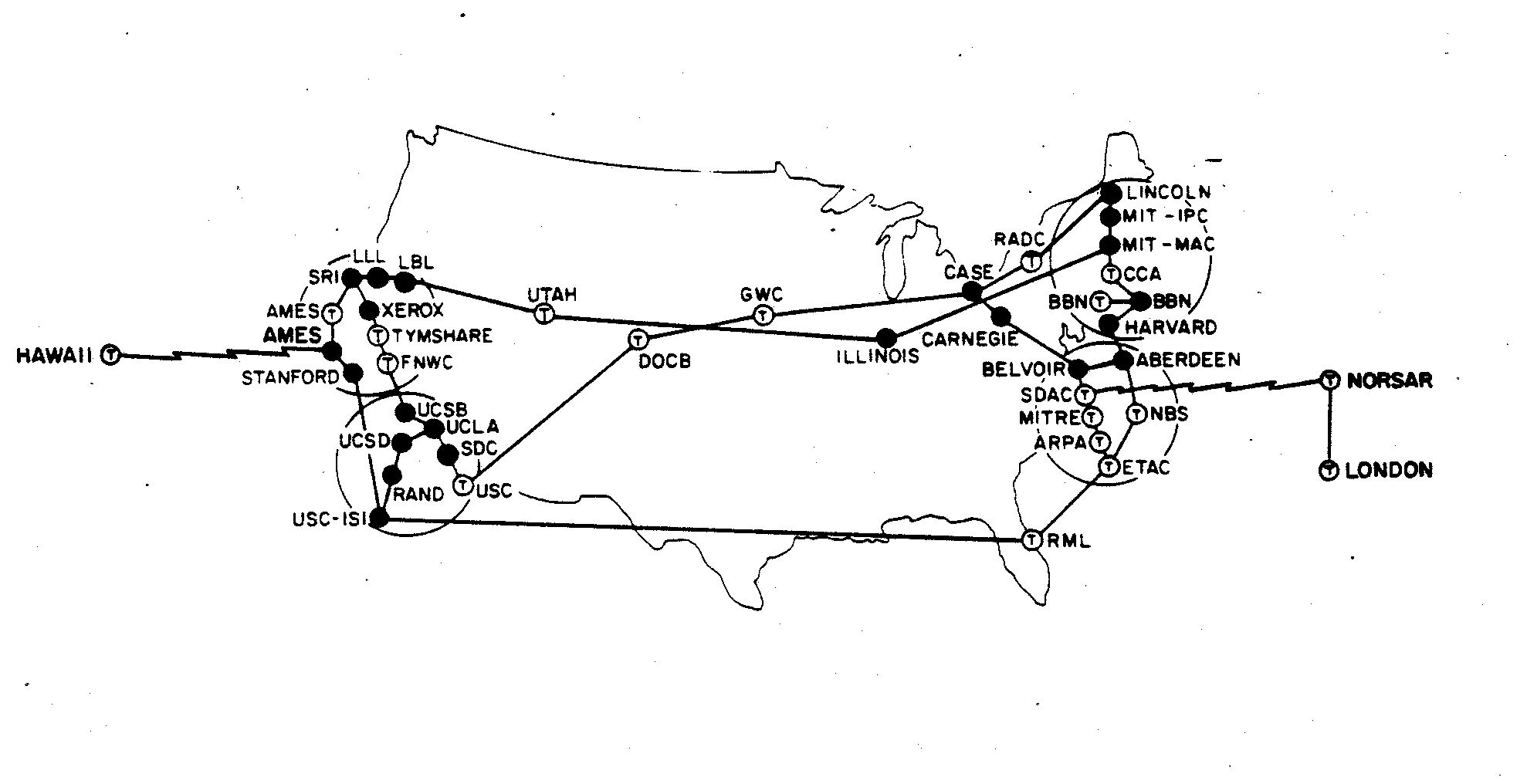
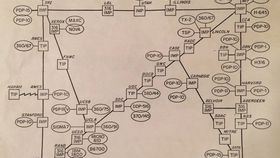
David Newbury tweeted a map of the Internet that his father saved in 1973 when he worked as a business manager of computer science at Carnegie Mellon University, one of the early pioneers of computer technology. Back then, it was known as the Advanced Research Projects Agency Network (ARPANET). This government-funded project was officially disbanded in 1990, but it effectively became the foundations of the current day Internet we all know. You can read more about the map in this a report from the NASA Ames Research Center.
Instead of the sometimes bewildering “Internet of things” we have today, it consisted of just 45 computers connected to 40 nodes. The squares represent the nodes, which are equivalent to a router, and the ovals represent a host, which essentially denotes a computer.
There was also some sleuthing on Reddit around the maps that managed to work out some of the university labs and military bases that the diagram was referring to, some of which are still about today.
For some perspective, here’s what a map of the Internet looks like today.
 This is how the network appeared when mapped out. California State University Domingues hill/Public Domain

 3
3