Culture and Society
 PUBLISHED






The latest laureates of the Ig Nobel Prizes have been announced, and it is another spectacular year of fascinating and outlandish research.
As is tradition, the prizes make us laugh, scratch our heads, and ultimately see how even the most “improbable research” pushes at the well of ignorance that surrounds us.
Ten awards were given out this year, and one among them all has been the focus of most discussion: the Ig Nobel Economics Prize 2026.
The study that won is actually over a decade old, and includes seven studies that compares the behavior of upper-class and lower-class individuals. It found that upper-class people behave more unethically than lower-class people.
.jpg "A Pacific beetle cockroach on a green background.")
The fourth of the studies in particular was about taking valued goods from others.
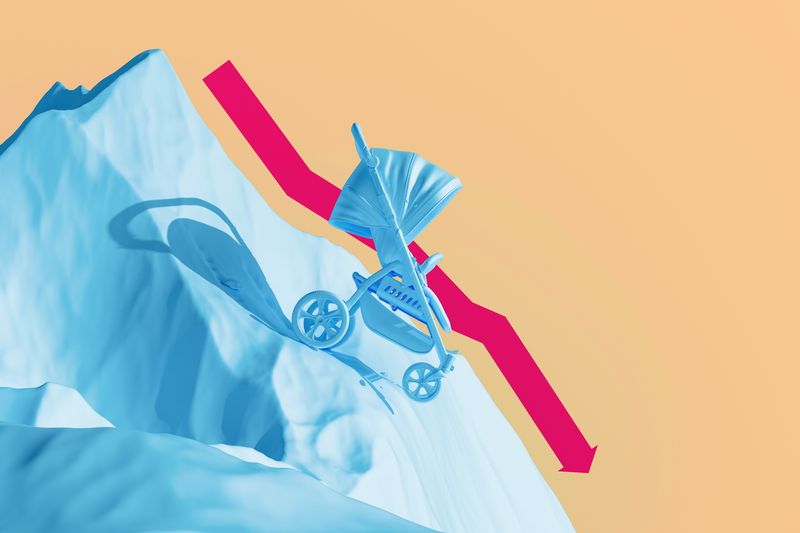
You might think that the work might have been about the widening income disparity happening worldwide, with the top 1 percent getting richer, the top 10 percent taking more than 50 percent of all income, and the bottom 50 percent earning less than 10 percent of the global income.
But the study was literally about taking candy from babies.
“At the end of the study, the experimenter presented participants with a jar of individually wrapped candies, ostensibly for children in a nearby laboratory, but informed them that they could take some if they wanted,” the authors explained. It turned out that the upper-class people took more candy than the lower-class people.
Kissing definitions and milky cockroaches
The Ig Nobel in Biomechanics went to a new study that looked into the evolutionary origin of kissing.
To do this, they had to come up with a more scientific definition of interlocking lips and tongues, and suggest that kissing evolved in an extinct ape-like ancestors between 21.5 and 16.9 million years ago.
“This is the first time anyone has taken a broad evolutionary lens to examine kissing,” Dr Matilda Brindle, lead author and evolutionary biologist at Oxford’s department of biology, said in a statement. “Our findings add to a growing body of work highlighting the remarkable diversity of sexual behaviours exhibited by our primate cousins.”
The work spurred countless headlines about how that means Neanderthals were probably smooching in their caves.
For the last two decades scientists have known that the Pacific beetle cockroach, Diploptera punctata, the only known cockroach that gives birth to live young, produces a “milk” that contains protein crystals. These crystals hold an exceptional amount of protein, up to three times as much as found in dairy milk.
Fortunately, scientists have been able to produce these protein crystals in vitro, without the need of milking the cockroaches, landing the team the Ig Nobel Prize for Chemistry.
That new baby smell… to soiled underwear
The Biology prize went to a group that worked out what, exactly. provokes venomous snakes to bite by gently stepping on different parts of their anatomy and recording if they strike. The Medicine-prize-winning study looked instead at how to blow one’s nose.
Sticking with that subject, there was a special Olfaction Prize this year. It went to a study that looked at how the smell of children appears to parents as most will know that while babies smell wonderful… teenagers maybe not so much.
“[This] tentative data suggests that certain body odors might act as a catalyst for bonding mechanisms,” the study authors wrote in the study.
A truly innovative study took an orthodox way to measure the health of soil.
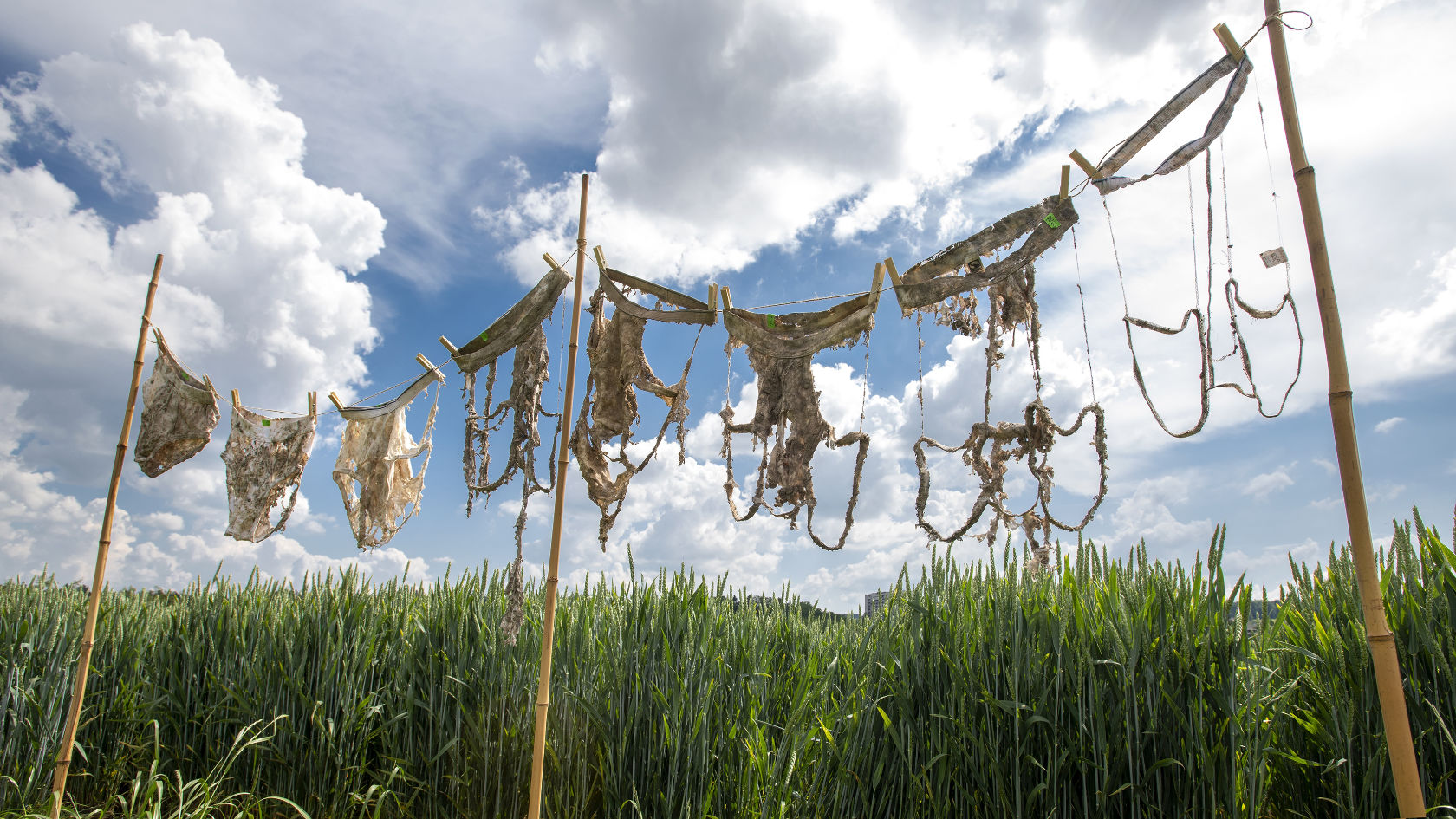
Researchers buried 1,000 pairs of identical cotton underpants in different locations and then dug them up after two months. The state of decomposition of the pants told the scientists a lot about the quality of the soil and what goes on down there (in the soil, not the pants).
“Our results show that how soil is managed can significantly affect both soil life and soil quality,” co-study leader Marcel van der Heijden, UZH professor of agroecology, said in a statement. “Healthy, biologically active soil is crucial for fertility, nutrient cycling and many other ecosystem services.”.
The Physics Prize went to a team that looked at an improved design for a splash-free urinal, while the Technology Prize was awarded to researchers who used the proboscises of mosquitoes as a nozzle for high-resolution 3D printing.
Last but not least, the Ig Noble Peace Prize went to a team who looked into how we want our friends to behave with us compared to how we want them to behave with others. And sometimes, we really do want vicious friends.