Culture and Society
 PUBLISHED


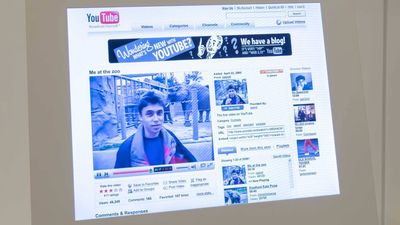


Ever wanted to go back in time to when YouTube was in its very infancy? Today, the social media giant is home to billions of videos that have been uploaded by users from across the world. But it all started somewhere, and now the very first ever video to be uploaded to the platform, the one that kicked it all off – “Me at the Zoo” – has been acquired by the Victoria and Albert Museum (V&A), London.
The video has nothing to do with me, I should add. That’s the title of the video that was first uploaded onto YouTube on April 23, 2005, by the company’s co-founder Jawed Karim. In the 19-second clip, Karim details his visit to the San Diego Zoo. In particular, he is discussing the elephants that you can see behind him. He can be heard saying, with a straight face, “The cool thing about these guys is that they have really, really, really long trunks.”
His insights may be disproportionately profound when compared to the precedent they set, but the video has been viewed over 382 million times and received over 18 million likes.
The V&A has worked with YouTube and oio, an interaction design studio, to reconstruct the early watch page, the platform’s early interface. They did so by using a code that had been captured by the Internet Archive’s Wayback Machine – an archive of the internet’s web pages accumulated since 1996. The chosen code for this restored interface dated to December 8, 2006.
“The acquisition of the earliest available YouTube watch page featuring ‘Me at the zoo’, dated 8 December 2006, captures a significant moment in the history of the internet and web design – the shift from a read-only internet to one centred on user-generated multimedia content, social interaction and collaboration, otherwise known as Web 2.0.,” Corinna Gardner, senior curator of design and digital at the V&A, said.
YouTube emerged at a now-historical moment when the increasingly reliable and fast broadband access of the 2000s replaced the then-outdated and slow (though iconic) dial-up internet of the 1990s. With the concurrent availability of digital cameras and web access came a new period where more people started recording and sharing videos that documented their lives or captured significant events.
Those who visit the V&A will be able to check out the video that represents the start of this new era that saw users creating increasingly sophisticated content (though obviously, this was not a uniform trend as anyone who glances at a YouTube feed will know). The video is on display in the Design 1900-Now gallery, which showcases technology, art and design produced since 1900.
“As a cultural and social phenomenon, the YouTube watch page is not only emblematic of Web 2.0 and the rise of user-generated content, but also a prescient sign of what would become the creator economy and platform capitalism. It reveals the ways in which early design decisions would become central to broader economic and cultural systems that define contemporary life,” the V&A said.
“The tech industry’s focus on growth and innovation gives it a pace that makes looking back and holding on to its history uncommon. This acquisition is an exciting opportunity to understand the rise of digital platforms and the history and design of the web. As technology continues to develop ever faster, the V&A aims to be a place for the understanding of how our designed world transforms our everyday and shapes the society of tomorrow.”


 1
1