Health and Medicine
 PUBLISHED


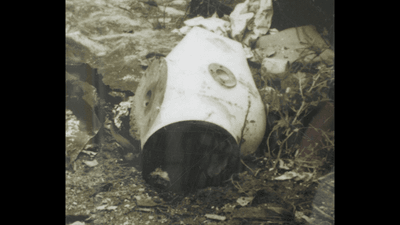


In 1987, a terrible accident unfolded in Goiânia, Brazil, where a radioactive capsule had been abandoned. People later found what they believed to be scrap metal and sold it on, beginning a sequence of events that would lead to the screening of over 112,000 residents for radioactive contamination, and the deaths of four people.
The Goiânia accident began when a private radiotherapy institute was moving premises and left behind a piece of equipment. It was a cesium-137 teletherapy unit, and something they were required by license to inform the authorities about – but they didn’t.
The radioactive equipment remained onsite during the premises’ demolition, where it was later discovered by two people who thought it might have some scrap value. Not realizing what they were about to pick up, they carried the hunk of metal home and tried to dismantle it, eventually exposing its deadly contents.
“The radioactive source was in the form of caesium chloride salt, which is highly soluble and readily dispersible,” reads an initial report by the International Atomic Energy Agency (IAEA). “Contamination of the environment ensued, with one result being the external irradiation and internal contamination of several persons. Thus began one of the most serious radiological accidents ever to have occurred.”

Capsule ruptured, they began selling off its parts whereupon one buyer noticed that something about his purchase was making it glow blue in the dark. The curious sight lured in many friends and family who wanted to get a look at the thing, and people were taking home samples the size of rice grains, fascinated by the find.
It was around five days later that people first started showing symptoms. They began as gastrointestinal issues that initially weren’t recognized as being the result of irradiation, but when someone eventually presented the capsule to the public health department, the severity of the situation became apparent.
A stadium became a temporary holding area for contaminated and injured people, and in total around 112,000 people were monitored, 249 of which were found to have been contaminated either externally or internally. Over 20 required hospitalization, and four died of acute radiation sickness.
It’s estimated that the worst affected were exposed to a radiation dose of around 4.5 to over 6 Gray (Gy). According to the Centers For Disease Control And Prevention, a person only needs to be exposed to a Gy of 0.7 to be at risk of acute radiation syndrome, putting the victims of the Goiânia accident up there with the most irradiated people in history, though Hisashi Ouchi is thought to have been exposed to far more during the Tokaimura Criticality Accident.
Blood results from 110 people involved in the Goiânia accident revealed radiation exposures ranging from zero to 7 Gy, and while there are medications that can be given for cesium exposure, the damage it does to our tissues means even survivors may later develop diseases, including cancer, as a consequence of the contamination.
“Cesium-137 enters the body through ingestion or inhalation,” reads a study published in the journal Clinical Toxicology. “This isotope emits beta and gamma radiation, both forms of ionizing radiation which damage living tissues.”
“The radiation dose lethal to 50% of an exposed population within 60 days (LD50/60) is approximately 3.5 to 4 Gray (Gy) without medical intervention. However, this dose increases to around 6-7 Gy when medical support is provided, which typically includes antibiotics, blood transfusions, granulocyte-macrophage colony-stimulating factor, and Prussian blue. Prussian blue binds to caesium, thereby facilitating its elimination from the body.”
So that's how failing to secure a teletherapy unit almost contaminated an entire city, in a story that demonstrates the responsibility of those liable for radioactive sources. Such pieces of equipment can remain a threat to human life for tens of thousands of years, a fact that should act as a lengthy reminder not to leave radioactive materials where people can pick them up.