Technology
 PUBLISHED


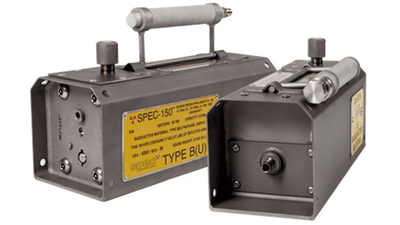


The Texas Department of State Health Services has launched a search after a camera containing radioactive material went missing in the Houston area.
According to the department, the camera went missing on March 9, 2023, with the last confirmed location being 4040 Little York Road in Houston. The Statewide Maintenance Company lost the camera, which is commonly used in construction to produce radiographic images, which are then used to detect flaws not visible to the naked eye.
Texas has not released information about the type of radioactive source inside the camera, though producers of radiography equipment Source Production & Equipment Co. advertise that it can use iridium-192 or selenium-75. The product uses depleted uranium (DU) as a shield. Depleted uranium – a less radioactive version of naturally occurring uranium – is often used as shield against radiation from X- or gamma rays, due to its high density.
"This type of radioactive source is called a 'sealed source' because the radioactive material is sealed inside a capsule, which is in turn sealed inside the camera with protective shielding and other safety features," the Department of State Health Services say in their press release.
"The outside of the camera has radiation markings. Levels of radiation outside the camera, itself, are not dangerous."
The only way the camera could pose a threat to the public is if the camera were dismantled and the radioactive material removed its housing. At that point, "it’s pretty dangerous pretty quickly", said department spokesperson Lara Anton, according to The New York Times.
So far the authorities have searched a five mile radius using radiation-sensitive equipment that can detect a radioactive source from about 15.24 meters (50 feet). The camera was reportedly found to be missing when workers returned from lunch at a fast food restaurant.
Statewide Maintenance Company are offering a reward for the return of the camera.
Just last month, a tiny radioactive capsule was lost on a highway in Australia, before – by some miracle – being found a few days later.

 1
1