Technology
 PUBLISHED


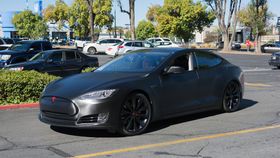


Joshua Neally was driving home from his office in Springfield, Missouri, in his new electric Tesla Model X when the unexpected happened. As the 37-year-old lawyer was cruising down the highway to get to his daughter's birthday, he was suddenly struck with severe chest pains. Writhing in pain and finding it virtually impossible to concentrate on driving, he pulled over to the side of the road.
“It was the most excruciating pain I've ever had... It was kinda getting scary. I called my wife and just said 'somethings wrong' and I couldn't breathe, I was gasping, kind of hyperventilating," Neally told local KY3 news.
He added: "I just knew I had to get there, to the ER."
Before that day, Neally had only used the car’s high-tech gadgetry to check his emails. But fortunately for him, his two-week-old vehicle was equipped with a semi-autonomous “autopilot” feature.
Now, first things first: The autopilot feature in these Tesla models is not fully autonomous – as in, you can't take a nap while the car automatically taxies you to your desired destination. It uses a combination of cameras, radar, ultrasonic sensors, and data to navigate and change speed on highways, while responding in real-time to other traffic. It’s much more like an enhanced and reactive cruise-control, which is designed to take pressure off the driver, not replace the driver.
The capability did, however, put in the extra legwork that allowed Neally to drive 32 kilometers (20 miles) down the highway while his concentration was impaired.
Neally then proceeded to manually drive the last remaining blocks to the hospital once safely off the highway. He managed to navigate around the hospital car park and to reach the much-needed medical attention inside.
After his examination, doctors told him later that he had suffered a pulmonary embolism. This is when a blockage, typically a blood clot, gets lodged in a blood vessel in the lung. These blockages can be extremely painful, cause shortness of breath, and are potentially life-threatening.
As Mashable points out, though, Neally overstepped the mark when using Tesla’s autopilot feature. They explain that the driver has to acknowledge they will "maintain control and responsibility" while using the feature, which he seemingly was not.
On the other hand, the story comes as a more positive one compared to the other headlines surrounding Tesla. In May, a man was killed while driving a semi-autonomous Tesla S. An investigation revealed the crash was caused by the car’s computer and camera failing to differentiate between a white 18-wheel truck and the sky, although there are suggestions he may not have been using the feature safely either.


 2
2