


 Space and Physics
 PUBLISHED

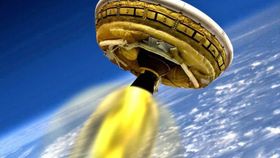


NASA will be showcasing its breakthrough cargo landing technology live tomorrow.
The Low-Density Supersonic Decelerator, or LDSL has been designed to allow soft landings of large pay loads on the surface of planetary bodies, like Mars and Earth. It will also allow access to much more of a planet’s surface, by enabling landings at higher altitude sites.
The rocket-powered, 7,000 pound, 15-foot diameter flying saucer inflates to full size via a series of balloons which increase its surface area, using drag to decelerate from Mach 3 to Mach 2, which allows for soft landings. The craft will be tested at Hawaii’s Pacific Missile Range Facility where it will undergo a “table top spin test”, demonstrating how the craft will spin as it decelerates its cargo during descent.
Broadcast live streaming video on Ustream
Broadcast live streaming video on Ustream
For more information about the LDSD take a look at NASA's website here.


