Culture and Society
 PUBLISHED


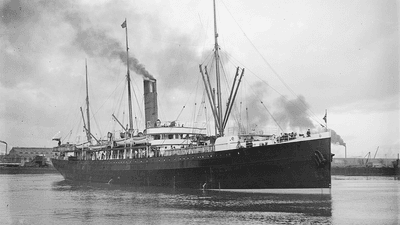


On December 30, 1899, or January 1, 1900, depending on where you were standing on the ship, the SS Warrimoo may have pulled off a fun and not-often-achievable feat of straddling two centuries, two seasons, and four hemispheres all at the same time, performing the ultimate "golden shellback."
The International Date Line, which separates calendar days around Earth, sits at the 180th meridian. This is because it sits opposite the Prime Meridian in Greenwich, UK, which was set by the International Meridian Conference in Washington in 1884.
As well as being opposite to the Prime Meridian, this placement of the International Date Line had the advantage of mainly passing over international waters (the line makes a meandering path in places, taking the long route around Alaska, for example, to keep The Last Frontier on the same day as the US as a whole).
This arbitrary divide between days is there to make our lives, and international co-ordination, nice and easy. It is much better if we can all agree on what day it is and where the dividing line on Earth is between East and West. But you can also have some fun with it if you're a sailor with an interest in time.
Mark Twain described one (two?) of these times as he traveled on board the SS Warrimoo in 1895.
"While we were crossing the 180th meridian it was Sunday in the stern of the ship where my family were, and Tuesday in the bow where I was. They were there eating the half of a fresh apple on the 8th, and I was at the same time eating the other half of it on the 10th—and I could notice how stale it was, already," Twain wrote in A Journey Around The World.
"The family were the same age that they were when I had left them five minutes before, but I was a day older now than I was then. The day they were living in stretched behind them half way round the globe, across the Pacific Ocean and America and Europe; the day I was living in stretched in front of me around the other half to meet it."
While it's fun to be in a different day from people standing less than a ship-length away, this crossing of the International Date Line was particularly troublesome for one new member of the ship. According to Twain (whose words cannot necessarily be trusted), a baby was born on the ship at precisely the wrong moment, leading to confusion about when to celebrate its birthday.
"Along about the moment that we were crossing the Great Meridian a child was born in the steerage, and now there is no way to tell which day it was born on. The nurse thinks it was Sunday, the surgeon thinks it was Tuesday," Twain continued. "The child will never know its own birthday. It will always be choosing first one and then the other, and will never be able to make up its mind permanently. This will breed vacillation and uncertainty in its opinions about religion, and politics, and business, and sweethearts, and everything, and will undermine its principles, and rot them away, and make the poor thing characterless, and its success in life impossible."
The ship had given a child two birthdays, but with Captain John Duthie Sydney Phillips at the helm in 1899, a more impressive feat was supposedly pulled off. On December 30, according to a report that came over 40 years later, the ship was sailing near the equator and the International Date Line when the second-in-command, F. J. Bayldon, pointed out that if they adjusted their course and speed slightly, they could cross both the 180th Meridian and the equator at exactly midnight.
On a normal night, that would make you a "golden shellback," or a sailor who has crossed both these lines simultaneously. But on that particular day, it would mean that your ship was in two different days, two different months, two different years, two different centuries, two different seasons, and four different hemispheres (north and south, east and west). Phillips reportedly took the ship to the right area at midnight, guided by the Sun and the stars, straddling both the equator and date line at midnight. No babies were born into this administrative nightmare, as far as the reports make out.
Though it is a fun idea, and certainly an achievable one if you are born in the right part of a century and have your sea legs, it's not entirely clear that this actually happened. While the ship was in the right general area at the time, the earliest reports found by Snopes of this event date to 1942. With no contemporary reports to be found, nor copies of the ships logs.
Snopes labeled this as "unproven", and that's probably a fair assessment. On top of this, without the very precise navigation equipment that we have today, it's not clear that they would be able to say they achieved this for sure, even if they had tried to.
To really suck the fun out of it, you can also argue that the new century did not start until January 1, 1901, but this won't win you many friends.