Space and Physics
 PUBLISHED
 3
3


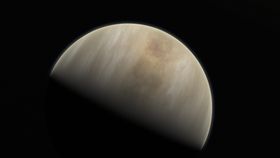


Last month, there was a big announcement: Venus appears to have a mysterious source of phosphine, a molecule that on Earth is associated with the decay of organic matter. However, several studies since then have brought the finding into question.
Currently, we don’t know whether or not there is phosphine in the clouds of Venus. The original work included two independent observations of the signal for phosphine, but the data for one of them may have been improperly calibrated and the analysis may have produced an unrealistically strong signal.
A new study in Astronomy & Astrophysics, which includes members of the original team, has followed up on the original work. The team looked for signs of phosphine on top of the clouds of Venus and found none. This by itself doesn’t mean there is no phosphine at all in the Venusian atmosphere as it's possible it's located in the deeper layers and not floating to the top.
However, the other more serious spanner in the works is a new analysis of the data. The original study first used observations from the James Clerk Maxwell Telescope in Hawaii, which provided an intriguing initial signal. A possible signature for phosphine was then detected, although the team couldn't be certain. For this reason, they used the more sensitive Atacama Large Millimeter/submillimeter Array (ALMA).
Their analysis once again showed the phosphine signature. The data is often full of noise, so the researchers used statistical analysis to confirm or deny the presence of the signal – an endeavor that is far from simple or foolproof.
An independent team re-analyzed the same data with the same method and found an unfortunate feature. The approach produced several other signals that looked real but in reality were not there. Their new analysis got rid of those fakes but didn't produce a strong signal for the phosphine. The possibility of phosphine is still there, but the data no longer allows scientists to say it is a definite detection.
On top of all of this, the ALMA data itself is now being re-processed as the observatory team has found an issue with the data set used and it is now being recalibrated. It is currently unclear if it affected the original or follow-up studies.
More observations are needed to confirm or deny the existence of this peculiar molecule on Venus, but we ought to be less excited about it for now.
[H/T: New Scientist]