Technology
 PUBLISHED


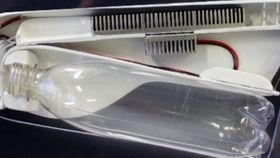


Cycling may be good for the environment as well as one’s own health, although there’s no denying it’s thirsty work. To help get around this issue, an Austrian innovator named Kristof Retezár has developed a self-filling water bottle, which sits on the frame of a bike and converts water vapor in the air into liquid, giving a whole new meaning to the term ‘water cycle.’
Named Fontus, the device was inspired by the need to overcome global water shortages, using air humidity as a source of drinking water. However, since the bottle needs to be moving in order to operate, it has been designed specifically as a bicycle accessory.
The bottle contains a solar-powered cooler, upon which condensation forms when water vapor in moist air comes into contact with its cold surfaces. These surfaces are coated in a hydrophobic material, meaning they repel water, thereby creating a stream of droplets that then collect in the bottle.
For this to occur, air needs to be continuously passing through the device, hence why it has to be in motion. According to Retezár, Fontus can generate about half a liter per hour when conditions are optimal. This requires a temperature of around 20ºC (68ºF) and a humidity level of 50 percent.
The device also contains a filter to prevent dust particles and insects from getting into the water, although it lacks any system of purification, meaning it may not be suitable for use in highly polluted areas such as large cities.
Fontus was a finalist for the 2014 James Dyson Award, and Retezár is currently hoping to raise funds for the development of a stand-alone version capable of drawing in air while stationary.


 2
2