


 Technology
 PUBLISHED


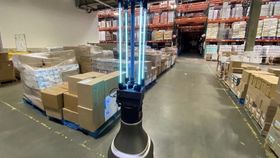


In the latest news about robots taking over the world, MIT has developed a robot capable of disinfecting an entire 4,000-square foot warehouse in 30 minutes, and could one day be used in schools and grocery stores.
Using a type of UV-C light to kill viruses and other harmful microorganisms, the robot can disinfect huge areas very quickly with little assistance. It was designed in a collaboration that began in April between MIT University’s Computer Science and Artificial Intelligence Laboratory (CSAIL), Ava Robotics and the Greater Boston Food Bank (GBFB) to try and combat the ongoing coronavirus pandemic.
Capable of completely killing coronavirus wherever the UV light touches, researchers believe that it would be a good option for disinfecting public stores and restaurants to limit further spread of the virus.
UV-C lights emit a wavelength of ultraviolet light that can sterilize surfaces and liquids rapidly and cheaply. The UV-C attacks the DNA of microorganisms directly, disrupting it and killing the pathogen. As a result, UV-C is able to kill tough microorganisms that other methods may struggle with, including MRSA and airborne pathogens. Currently used in a wide array of industrial applications, like wastewater processing and laboratory sterilization, UV-C is becoming more popular in commercial markets and could be integral to combatting coronavirus in the long run.
The robot features a UV-C array built on top of a mobile robot previously built by Ava Robotics that is completely autonomous and free from any human supervision. The robot mapped the given space and created waypoints, delivering set doses of UV at each checkpoint and successfully disinfecting the entire GBFB warehouse in 30 minutes. It’s designed to either aid or replace chemical sterilization, which can be expensive and time-consuming.
“Food banks provide an essential service to our communities, so it is critical to help keep these operations running,” said Alyssa Pierson, CSAIL research scientist and technical lead on the UV-C lamp, commenting on the impact of this technology on local food supply and worker safety in a press release. “Here, there was a unique opportunity to provide additional disinfecting power to their current workflow, and help reduce the risks of Covid-19 exposure.”
With food banks in the US facing increased demand during the pandemic, some banks are having to ration supplies as the number of people that have lost their jobs in the last five weeks tops 26 million.
It is hoped that reducing manpower and effective sterilization through robots could free up labor for helping combat the crisis, whilst effectively protecting the workers from Covid-19.



 1
1