


 Health and Medicine
 PUBLISHED


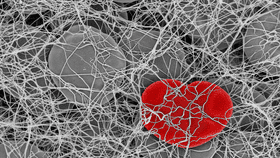


If there’s one way to capture the public’s attention and showcase the incredible work being done by people in a particular field, it’s through breathtaking photography. And just because it’s scientific research done on a cellular level doesn’t mean it can’t be truly breathtaking.
The British Heart Foundation’s Reflections on Research competition has been running since 2005, showcasing the groundbreaking research it funds through exciting and often beautiful photographs.
This year was no different, with images of a heart-shaped blood clot, the inside of a blood vessel, and a fibroblast that looks like a comet all vying for the number one spot.
The images are impressive to look at, but it’s important to remember that they are more than just a pretty picture. Their real value is in highlighting the vital work helping us to understand heart disease that the people behind the camera do every day.
The judge's winner, "Getting to the heart of the problem" by Fraser Macrae of the University of Leeds (above), shows a red blood cell compressed into a heart shape by the fibrin fibers, which hold clots together, contracting around it. Macrae is studying blood clot structure and how the fibers adapt to clot-busting drugs.
"I was amazed when I saw the blood cell which by chance had been squeezed into a heart shape," Macrae told the Daily Mail. "As someone who is investigating aspects of heart disease, it seemed to be very symbolic."
The supporter's favorite – as voted by the Foundation's online followers – was "An artery’s insides" by Dr Matthew Lee of the University of Strathclyde (below) revealing the innermost layer of blood vessels on an incredible scale.

“This image tells a story of how science and art can come together to help advance our knowledge of modern medicine," judge and royal photographer at Getty Images, Christopher Jackson, said. "At the same time, images like this give us the opportunity to appreciate the incredible beauty in something that is invisible to the human eye."
Check out the rest of the incredible shortlisted photographs here.


"Heart of hearts" - Dr Sean Davidson, UCL. BHF


 11
11