Nature
 PUBLISHED
 5
5


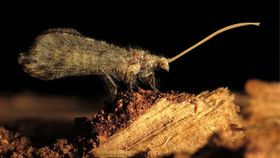


In the New York Times Bestseller, “Does It Fart? The Definitive Field Guide to Animal Flatulence,” authors Dr Nick Caruso and Dr Dani Rabaiotti reveal the parping potential of everything from herrings (big yes) to dinosaurs (also yes). One of the most formidable species in the book, described as having “one of the few genuinely fatal farts known to science” is the beaded lacewing, Lomamyia latipennis. To the untrained eye, these insects look like an innocent, frosted moth, but this particular species of lacewing is harboring an odorous secret.
L. latipennis is a dedicated follower of termites, found on all the same continents as these eusocial insects (which is every continent except Antarctica, by the way). An adult beaded lacewing will conveniently lay her eggs within wriggling distance of a termite’s nest, which the larval form of L. latipennis will sneak into after hatching. You might think a legless larva wouldn’t stand much of a chance against an army of termites, but L. latipennis have evolved to practice a unique and highly effective means of attack.
When a larva comes across some termites, it raises its rear-end to the termite’s head-height and releases a vapor-phase toxicant called an allomone which knocks them out, and the larva feasts on their frozen bodies. In essence, it farts them to death. Depending on how many unfortunate termites are downwind when the toxic toot fires off, a study found that the larva can actually take down multiple termites with a single poof. A deadly yield that’s particularly impressive when you realize the average L. latipennis is about 1/35th the weight of the termites. That’s some serious #gainz for one guff.
The study found the potent excretion is remarkably specific, too, and had no effect on other insects found in the corridors of a termite’s nest including flies, wasps, and booklice. As if it weren’t all grim enough, the termites don’t actually die from the initial exposure but are paralyzed, which means they’re still alive when the larva starts feeding. Even those who don’t get eaten are likely to eventually die from the exposure. So, there you go. That’s something you know now.
While the original study, published in Nature back in 1981, yielded some magnificent results, the exact contents of the lacewing fart that proved so fatal were not identified and, according to a report from Wired, no one has been able to repeat the original experiments so, for now, it remains a mystery.

[H/T: Wired]