


 Nature
 PUBLISHED

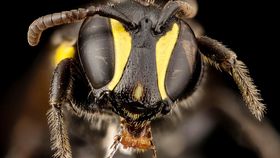


Are bees the solution to the plastic crisis? Well, New Zealand-based start-up company Humble Bee thinks they just might be(e).
Hylaeus nubilosus is a rather introverted member of the bee world. Unlike their more sociable honeybee cousins (which actually include seven species), they do not live in hives. They don't make honey. And they definitely do not waggle dance.
Instead, these solitary insects make a particular kind of nesting material that bears a striking resemblance to cellophane. It is this that excites Humble Bee founder, Veronica Harwood-Stevenson. She hopes to turn this naturally occurring substance into an eco-friendly plastic substitute that is not only sustainable but water-repellant, flame-resistant, heatproof, and impervious to strong chemicals.
"Plastic particles and chemicals have permeated ecosystems and organisms around the world, [from] foetal blood of babies [to] the most remote Arctic lakes; it's so pervasive, it's terrifying," she told The Sydney Morning Herald. But she has a plan.
"There are many types of plastics and we're looking at one type, but what we're working on has useful industrial properties... and I believe it has applications in multiple industries."
Right now, staff at Humble Bee are working on a way to reverse engineer the material to make a cheap and sustainable "plastic" that can be produced en masse. Meanwhile, Harwood-Stevenson is working with scientists at Victoria University's Ferrier Research Institute to study H. nubilosus, better known as the Australian masked bee.

The journey began when Harwood-Stevenson noticed an offhand comment in a paper that described H. nubilosus' nesting material as "cellophane-like" with bioplastic potential. She has since invested prize money from Wellington Regional Economic Development Agency's Bright Ideas Challenge along with her house deposit to continue the research.
Harwood-Stevenson admits that they are still at an "early stage" of the development process.
"It's about biomimicry, about copying what's in the natural environment, and we've been doing it in design for centuries, from plane wing design inspired by birds of prey to train shapes reflecting bird beaks," she added.
Aside from H. nubilosus' nesting material, scientists are using shrimp shells, crab shells, and food scraps to create various bioplastics – watch this space.
[H/T: The Sydney Morning Herald]

.jpg)