Technology
 PUBLISHED
 7
7


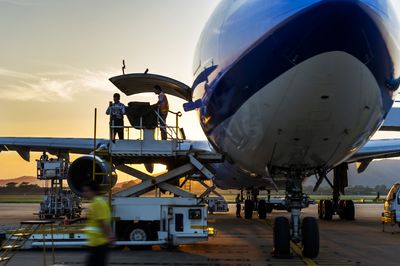


An airline worker died after being ingested into the engine of an airplane at San Antonio International Airport in Texas on Friday.
The plane was an Airbus A319 operated by Delta Air Lines that was arriving in San Antonio from Los Angeles, according to a statement from the National Transportation Safety Board shared with NPR. The plane was reportedly taxiing on one engine to the gate when a worker on the runway was sucked into the turbine and killed instantly.
Airplanes like this are often powered by high-bypass turbofan engines, which essentially intake huge amounts of air into compression chambers to pump out thrust. These engines are incredibly powerful, capable of taking in 1.2 million tons of air per second at full power.
Despite this immense power, incidences of deaths involving the engine are relatively rare considering how many commercial flights take off each day globally. Boeing, a major airplane manufacturer and competitor to Airbus, claims there have been 33 recorded incidents of fatal ingestion involving their 737-100/-200 aircraft since 1969, plus four reports involving their 737-300/-400/-500 and Next-Generation 737 airplanes.
However, it is the second time such a death has occurred in the US within a year. Courtney Edwards, a 34-year-old ground worker, died at Montgomery Regional Airport Alabama on New Year's Eve 2022 as a result of being ingested into the engine. An investigation reportedly concluded that the fatal accident was a result of her breaking safety protocols by repeatedly walking too close to the plane’s engine when it was left running for a cooldown period.
It’s still unclear why the incident at San Antonio International Airport last week occurred, but an investigation is underway.
“From our initial investigation, this incident was unrelated to Unifi’s operational processes, safety procedures, and policies,” Unifi, the third-party contract which employed the anonymous person, said in a statement to BBC News.
A Delta spokesperson said the airline was "heartbroken" over the death of an "aviation family member's life".