Technology
 PUBLISHED


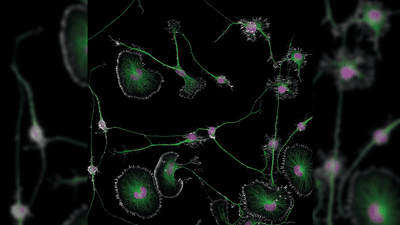


Since its inception in 1974, the Nikon Small World competition has given us the chance to see beyond the naked eye. Now celebrating its 50th anniversary, the winners of this year’s contest are no different in showcasing the beauty and complexity of the microscopic world in a whole host of amazing images.
The first-place winning image, seen above, was taken by Dr Bruno Cisterna, with help from Dr Eric Vitriol, and features the intricate structures of differentiated mouse brain tumor cells. It was taken as part of research to better understand how changes in the structures that help cells maintain their shape and transport molecules can lead to neurodegenerative diseases.
In second place is an image of an electrical arc between a pin and a wire, taken by Dr Marcel Clemens. An electrical arc is a discharge of electric current across a gap in a circuit and to produce this one, Clemens had to apply a potential difference of a whopping 10,000 volts.

When it comes to animals, this year’s winners have also come up trumps, with a range of images featuring everything from a cluster of octopus eggs to the wing scales of colorful butterflies and moths and, of course, some very spooky green crab spider eyes.


Plant and fungal life don’t miss out either, with contestants capturing tiny bubbles inside a cannabis leaf, black truffle spores, and some slime mold to boot.

If you’re after the slightly more gory, there’s even some parasitic action, with the remnants of an insect egg that’s been parasitized by a wasp and some Toxoplasma gondii in a human skin cell.

While we’ve showcased some pretty amazing images here, the competition this year received around 2,100 entries from 80 countries. To make the 87 recognized in the final list, the images had to demonstrate criteria including originality and visual impact, as well as technical proficiency.
However, “Nikon Small World is more than just an imaging competition,” said Eric Flem, Senior Manager, CRM and Communications at Nikon Instruments, in a statement emailed to IFLScience. “[I]t’s become a gallery that pays tribute to the extraordinary individuals who make it possible. They are the driving force behind this event, masterfully blending science and art to reveal the wonders of the microscopic world and what we can learn from it to the public."
All the images from this year's competition can be found here.