Space and Physics
 PUBLISHED


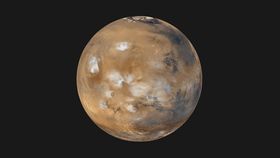


Just like David Bowie, astronomers often ask themselves if there's life on Mars. And although we have been studying the mystery for 40 years, we have yet to find an answer.
But a new paper, published in the journal Astrobiology, reviews the last four decades of analysis of the Red Planet, and it argues that the possibility of living microbial life on Mars is higher than many scientists and non-scientists might think.
The research is based on the Labeled Release (LR) experiments from the Viking Mars landers in the late 1970s. The LR was devised to look for metabolic signatures – chemicals produced by living organisms. The probes did find some interesting chemicals, but the authors of the 1976 summary report, Gilbert Levin and Patricia Ann Straat, deemed the results inconclusive.
The same two scientists worked on the new study, which re-examined the Viking data in combination with recent results from other missions that explored water, methane, and organic compounds. They conclude that non-biological explanations for the Viking data are unsatisfactory and that the biological hypothesis is still a strong contender.
In the LR experiments, samples of Martian soil were inoculated with a drop of a diluted nutrient solution tagged with a radioactive carbon isotope. The air above the samples was monitored, and the researchers subsequently detected the radioactive isotope in carbon dioxide from the samples. When the results were repeated a week later, they did not find the same signature – an indication that the chemical reaction didn’t depend on a living organism.
The alternative hypothesis suggests that there’s an oxidizing agent present, which turned the added compounds into carbon dioxide. A compound known as peroxide-modified titanium dioxide appears to produce similar results to the one seen by Viking landers.
"Even if one is not convinced that the Viking LR results give strong evidence for life on Mars, this paper clearly shows that the possibility must be considered," said Chris McKay, senior editor of astrobiology and an astrobiologist with NASA Ames Research Center in Moffett Field, California, in a statement.
It might seem like a "god-awful small affair", but the presence of microbial life on Mars could be crucial in deciding what’s the best approach for future crewed missions to the Red Planet.
[H/T: Science Direct]