Health and Medicine
 PUBLISHED


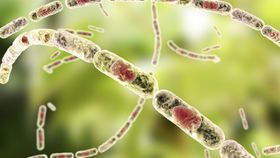


Caused by a bacteria, anthrax is a life-threatening deadly disease. While rare, people can contract the disease if they come into contact with infected animals, people or contaminated animal products. But anthrax is only one species in a group of bacteria, and now researchers have identified a brand new pathogen causing an anthrax-like disease in Central Africa that infects both domestic and wild animals, including our closest evolutionary relatives.
The bacteria responsible for anthrax is known as Bacillus anthracis, and is closely related to another less threatening and more widespread species known as Bacillus cereus. Commonly found in the ground and soil around the world, most of the time B. cereus is harmless, but it now seems that one particular strain in Africa has developed a more sinister ability.
After sampling goats in a remote Congolese village, researchers from the Robert Koch Institute in Berlin isolated a bacteria found in an animal that was dying. Not long after, they also sampled the remains of a chimpanzee, gorilla, and forest elephant found dead in the forests of Cameroon, Central African Republic, and Côte d’Ivoire.
From these, they identified a novel strain of the B. cereus bacteria, but one that has seemingly evolved a similar lifestyle to B. anthracis independently. The researchers have called the new strain “B. cereus biovar anthracis”, as it seemingly displays a mixture of features from both bacteria. They reported the findings in the journal PLOS Neglected Tropical Diseases.

One of the researchers sampling the carcass of a forest elephant discovered in central Africa, in which they found the novel strain of bacteria. Antonation et al.
The main factor that makes B. anthracis so virulent and deadly when contracted is the genes encoded on two small plasmids within the bacteria, known as pXO1 and pXO2. The researchers found that the new B. cereus biovar anthracis strain also has these two plasmids, presumably also conferring the virulence displayed, but that it has seemingly acquired them on its own. Yet while there are many subgroups within B. anthracis indicating multiple ancestors, there is only one within B. cereus biovar anthracis, suggesting a singular ancestry.
The researchers suspect that the newly identified pathogen may be more widespread, potentially throughout the African continent, though it is potentially restricted to the more humid and warm regions of the tropics. This, postulate the authors, could be down to the strain's ability to produce spores under very specific climatic conditions, although obviously at the time of writing this is mainly speculation as more research needs to be undertaken as to the exact biology of the pathogen.
They warn, however, that due to the presence of the disease in both chimpanzees and gorillas, as well as in livestock, coupled with its apparent deadly nature, that more surveillance should be carried out in the region in order to assess its impact not only on threatened wildlife species, but also the local people living in the region.