Culture and Society
 PUBLISHED
 24
24


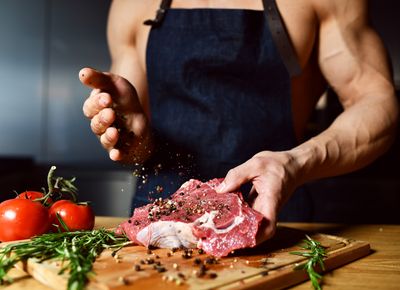


As the world increasingly turns towards vegetarian and vegan diets, one group are having a much harder time making the switch: men. Men generally eat more meat than women and are more resistant to changing this, so why are they so stuck in their ways?
The answer, like many things, could be good ol’ fashioned toxic masculinity, argues a recent study. Researchers from Australian National University suggest that men may resist making the switch to being meat-free because eating meat makes them feel more “manly”, while not doing so threatens their masculinity.
The research looked at a large cohort of 4,897 Australians and gave them an online survey, looking at their attitudes towards meat consumption and their self-rated genders. They measured to what extent men felt masculine and women felt feminine, then performed an analysis to identify whether this was a moderator of their attitudes towards meat.
They found that men that identified as more masculine were less likely to consider reducing their meat consumption and that they were more likely to consider meat as “necessary”. For both genders tested, people with more gender-typical self-ratings were more likely to rate meat as “nice” and “natural”, suggesting these feelings could play a role in whether they would consider veganism or vegetarianism.
The findings support previous research that simply being male makes you less likely to try cutting out meat, but subscribing to typical ideas of masculinity could explain the difference. Interestingly, women that self-rated as more feminine more likely to eat meat.
The researchers argue that these factors may need to be looked at if Australia's rates of vegetarianism and veganism are to increase, which are currently quite low. It is also possible that meat alternatives could use these ideas in their marketing campaigns to cater to people that are unwilling to change because of gender perception.
It is important to note that the results come from self-reported surveys, so may be prone to biases, and that the correlations were not particularly strong, though they were significant.
The researchers have a few explanations as to why this could be happening. First, they suggest that men’s self-rated gender typicality is a predictor of behavior (such as actually reducing meat) but that when it comes to attitudes, both men and women fall victim to these ideas of gender norms.
Second, it could be that adopting vegetarianism and veganism is a violation to the norms of both men and women, so those that conform to typical gender norms are less likely to stray away from cultural norms of eating meat. Finally, it could just be that those that conform to typical gender norms are more conservative, so hold more conservative views on eating meat.
Regardless, it is an interesting link that warrants further investigation; and if you don’t eat meat because it harms your gender perception, just know that absolutely no one worth worrying about actually judges you on that. Seriously, just eat what you want.
The research is published in the journal Sex Roles.