Technology
 PUBLISHED


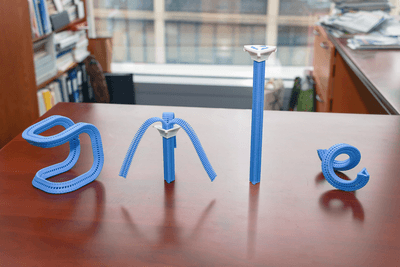


Over 40 years ago, William Freeman proposed a very clever idea. What if you could build a three-sided zipper? It wouldn’t be used to fasten your jacket or jeans, but it could be used for items that need to be both soft and rigid: chairs, tents, travel bags, and purses. Freeman is now a professor at MIT, where scientists have at last made his patent a reality. Why (or is that, Y)? We asked them.
The team at the MIT Computer Science and Artificial Intelligence Laboratory (CSAIL) used 3D printers to create the three-way Y-zippers that can be used in items of what they are calling "tunable stiffness". “This three-way zipper is trying to achieve a mechanism able to transit from flexible to rigid,” MIT postdoc and CSAIL researcher Jiaji Li told IFLScience.
It's not obvious that the system should work easily. You need something that, when zipped up, is strong enough to stay rigid while also being made of components that can be rolled or folded when unzipped.
“It is a little bit tricky to build because you need to consider it as a structure that resists forces from all kinds of directions. You need to resist the sheer force and compressing, and also, it cannot be stretched. Another challenge is how you make it super flexible where you unzip it,” Dr Li told IFLScience.
Back in 1985, Freeman had been an electrical engineer at Polaroid. He saw an ad in Scientific American from the Innovative Design Fund offering up $10,000 to support novel prototypes for textiles and home decor. His three-way triangular zipper proposal suggested a new way of seamlessly switching items like chairs or tents between a soft and rigid state, making them easier to put together or pack away. His proposal was rejected, but he patented the idea anyway, packing it away in his garage.
Now, 40 years later, the team turned to new technology to make this old idea a reality.
They tested two common plastics commonly used in 3D printing, finding that polylactic acid (PLA) could handle heavier loads, while thermoplastic polyurethane (TPU) was more pliable. In terms of durability, one test had them going for 18,000 cycles of zipping and unzipping before they broke.
The team has now shown that the zippers work and can be shaped to have a bend or a twist or even be in the shape of a coil.
“With the advancement of manufacturing and fabrication, now we can just fabricate all kinds of zippers in all kinds of different shapes,” Dr Li told IFLScience.
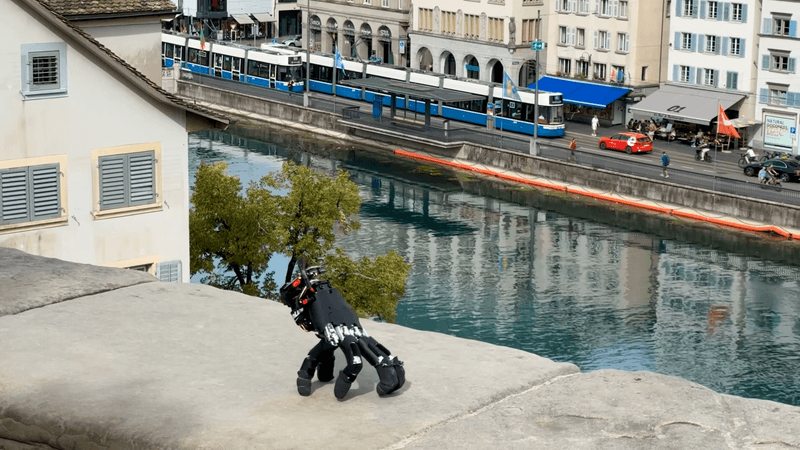
The team envisions several types of applications. The zips could be used in camping tents that could be put up without poles. You just zip it up, and the tent is ready. They could be used in flexible casts for limbs, with adjustable stiffness, making it more rigid at night when one might accidentally make a wrong movement. It could even be used in quadruped robotics to extend limb length to better navigate difficult terrain or to create dynamic art installations. This is on top of the ideas that Freeman envisioned 40 years ago.
The team considers the possibility that in the future, with better manufacturing and 3D printing techniques, it might be possible to create even more durable and stronger three-way zippers, perhaps with metals. This could open up applications even further.
The work was presented at the ACM’s Computer-Human Interaction (CHI) conference in April.


 1
1