Technology
 PUBLISHED


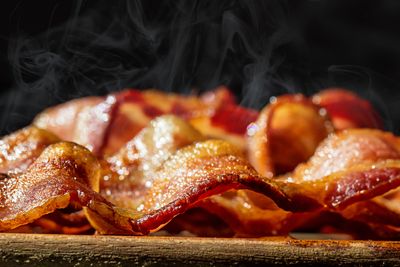


Researchers claim to have bulk-produced cultivated fat tissue with tunable amounts of fat molecules, potentially allowing lab-grown meat to finally replicate that true meat taste. The lab-grown fat has the same molecular makeup as natural fat and can be produced at scale, making it have the potential to be used in the same processes currently creating lab-grown meat.
Scientists have gotten pretty good at making lab-grown meat and startups have already begun mass-producing it, hoping to compete with animal-derived options. However, while they can produce muscle tissue well, it’s still missing that one key ingredient in a delicious steak or slice of bacon: fat. Fat gives a lot of meat its flavor – there's a reason that Wagyu beef is so expensive (hint, it’s a lot of well-placed fat). Without it, the meat can taste downright boring.
Scientists have been able to produce adipose tissue in the lab for a while, but creating it on a large scale has been the barrier preventing it from entering the cultivated meat market. When fat tissue develops in humans and animals, so too does a vast vascular network that supplies it with oxygen and nutrients. This is not easily replicated in a lab, so just millimeters can be made before the fat cells inside become starved and die.
So, instead of cultivating it in one large fat mass and hoping for the best, researchers from Massachusetts began by cultivating the fat cells in a two-dimensional layer and then clumped them together into larger three-dimensional masses, using a binder that is edible and widely used in food already.
Once formed together, the mass resembled the type of fat you get in animal meat.
“Our goal was to develop a relatively simple method of producing bulk fat. Since fat tissue is predominantly cells with few other structural components, we thought that aggregating the cells after growth would be sufficient to reproduce the taste, nutrition and texture profile of natural animal fat,” says first author John Yuen Jr, a graduate student at the Tufts University Center for Cellular Architecture (TUCCA), Massachusetts, in a statement.
“This can work when creating the tissue solely for food, since there’s no requirement to keep the cells alive once we gather the fat in bulk.”
Subsequent experiments found that the new fat tissue withstood a similar amount of pressure as native fat (it had a similar squishiness) and that this could be tuned to the desired texture. The cellular composition of the lab-grown mouse fat was slightly different compared to natural mouse fat, but the cultured pig fat was a lot closer, and the researchers believe they can supplement the cultured fats with lipids to make them extremely similar. Essentially, they believe they can make it taste and feel like the real deal.
Now, the researchers hope the technique can be applied to a larger scale to make cultured meat more viable, in the eventual pursuit of pivoting away from the climate-damaging and ethically questionable mass meat market.
The research is published in the journal Cell Biology Stem Cells and Regenerative Medicine.



 2
2