Technology
 PUBLISHED
 9
9


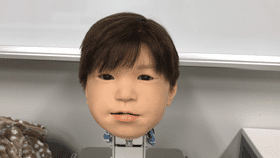


Japanese roboticists have developed a suitably creepy child robot that can feel pain. This might seem like a cruel gift to give to a robot, but the researchers say it could help robots understand and empathize with their human companions.
Scientists from Osaka University have developed a synthetic skin that contains sensors to subtly detect changes in pressure, whether it's a light touch or a hard punch. This artificial “pain nervous system” was then hooked up to a life-like android robot child that was able to react to the sensations using a variety of facial expressions.
Minoru Asada presented the research team’s work on February 15, at the annual meeting of the American Association for the Advancement of Science in Seattle.
Named Affetto, the robot child was first revealed by Osaka University in 2011. At the time, it was just a realistic head capable of pulling a variety of expressions, such as smiling and frowning. This was made possible through a soft skin-like material covering the robot that moved using 116 different facial points. This latest project has given the boy robot a body, complete with artificial skin covered-skeleton covered in the new tactile sensor.
The aim is to make more realistic “social” robots that are able to have deeper interaction with humans. This might sound like a long-term pipedream, but it’s not as far out as it might seem. Japan has already rolled out robots in nursing homes, offices, and schools as a way to deal with its aging population and shrinking workforce. Some states in the US have also been experimenting with using real-life Robocops to patrol the streets – often with mixed results.
The theory goes that these robots will able to communicate with humans more authentically and effectively if they give the impression they are capable of feeling like us. However, speaking to Science News, Antonio Damasio, a neuroscientist at the University of Southern California, was quick to point out that this is “not the same thing” as a robot actually computing and experiencing some kind of internal experience.
So, if young Affetto is gazing at you with puppy dog eyes and a sad frown, try not to feel too bad.
[H/T Science News]