Technology
 PUBLISHED






If you flip on a light switch in the small fishing town of Bermeo, northern Spain, there’s a chance some of that electricity came from a hydrogen-fueled power plant down the road.
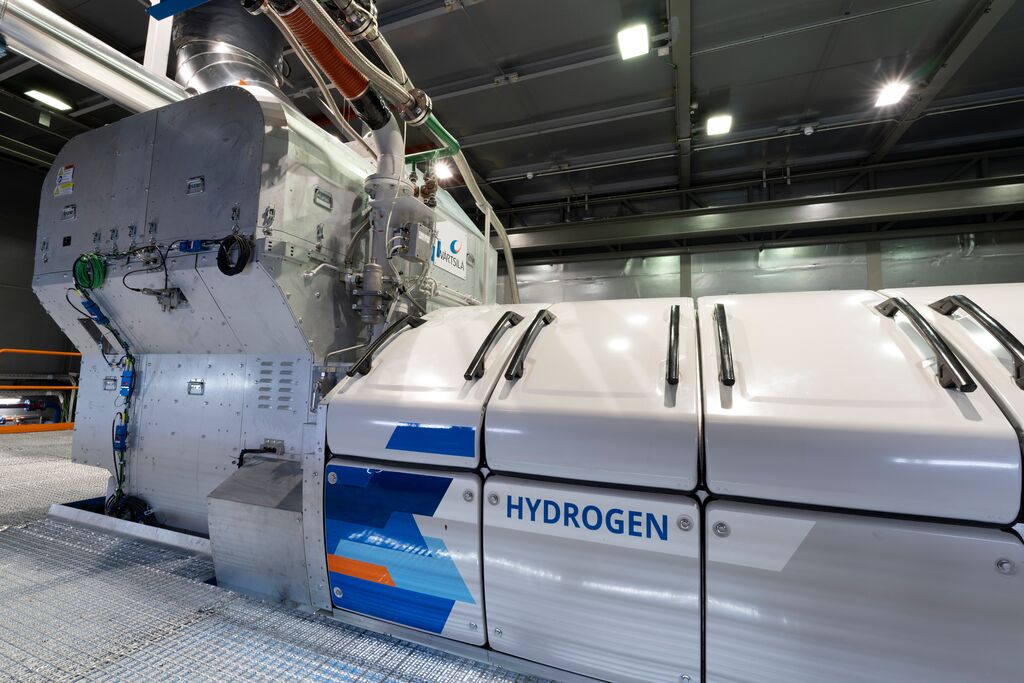
It's part of a world-first trial by Finnish energy technology company Wärtsilä in Bermeo, Basque Country. As of June 2026, the town’s local energy grid is connected to a Wärtsilä 31 four-stroke engine platform fuelled by 100 percent "green" hydrogen.
What is a hydrogen engine?
“At its core, the hydrogen engine works in a very similar way to a conventional gas engine, but it uses 100 percent hydrogen instead of natural gas as the fuel,” Rasmus Teir, Director of Technology Strategy & Decarbonisation at Wärtsilä, told IFLScience.
“Hydrogen is fed into the engine and mixed with air, and this mixture is spark-ignited to create energy. That energy drives the engine, which in turn drives a generator, generating electricity.”
Since pure hydrogen fuel doesn’t contain any carbon, it doesn’t produce any CO₂ emissions. The only byproducts are water and tiny amounts of nitrogen oxide, which can be captured.
At this stage, the project is a proof of concept. Wärtsilä is keeping schtum about how much their hydrogen engine is contributing to Bermeo's electricity grid, but the company says the trial demonstrates that its vision works in the real world.
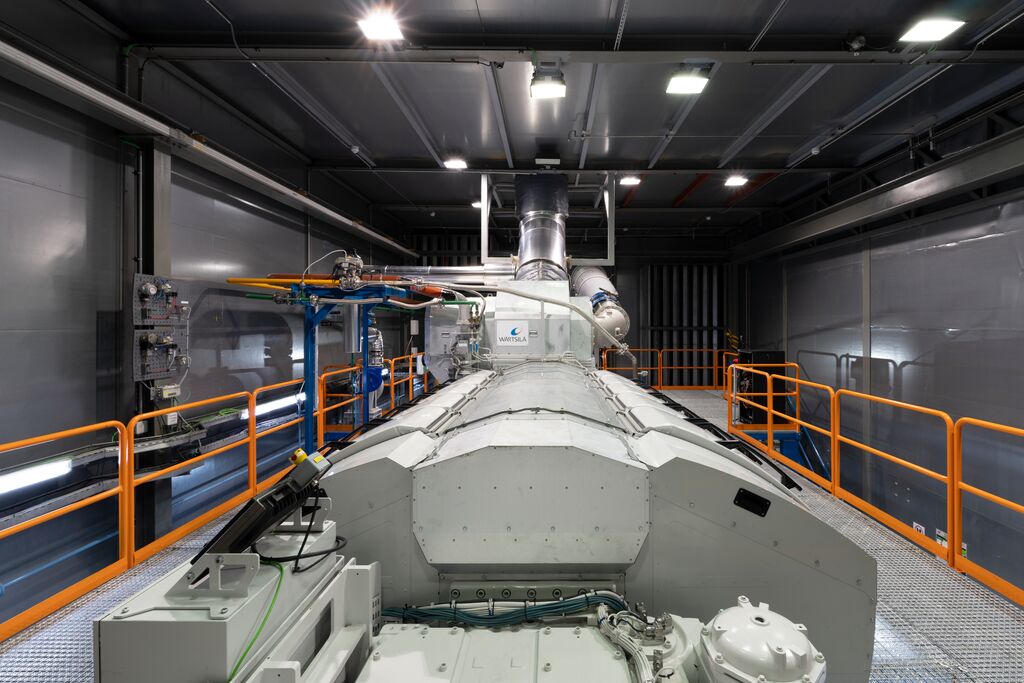
“What we have demonstrated in Bermeo is that this is not just theoretical – a large-scale engine can run fully on 100% hydrogen and supply electricity to the grid in real-world conditions,” explained Teir.
“At this stage, the demonstration is not about powering a specific town or supplying a fixed share of local demand. It is a technology validation project, where the engine is connected to Spain’s national grid to prove that it can generate reliable electricity using 100 percent hydrogen, operating in real grid conditions,” he continued.
Can the technology scale?
The next question is how the technology might be applied more broadly and whether it can scale beyond a single demonstration site. This is where things could get tricky for Wärtsilä: hydrogen fuel is great in theory, but it comes with some significant drawbacks.
For one, it isn't nearly as efficient as burning fossil fuels. For all their faults, gas and oil pack a lot of energy into a small, combustible package. Hydrogen, by comparison, is comparatively inefficient.
Then there's the matter of obtaining the hydrogen in the first place. Producing "green" hydrogen typically means using electricity to split water into hydrogen and oxygen, which is an energy-intensive, fiddly process that eats into the overall efficiency of the system before the gas is ever burned.
Finally, storing and transporting hydrogen can cause headaches. It has a very low energy density by volume, so it either needs to be compressed to extremely high pressures or cooled to around -253°C (-423°F) to keep it liquid. This typically requires specialized, expensive infrastructure.
Additionally, its tiny molecules are also prone to leaking through seals and pipework that would happily contain natural gas, and they can make certain metals brittle over time.
Looking to the future
Even so, those drawbacks don't rule hydrogen out everywhere, and it could still have a valuable role in the world's energy mix.
For instance, one promising use case is niche, high-demand projects that need reliable power but are also under pressure to decarbonize, such as energy-hungry data centers.
“For AI data centers aiming to decarbonize with a high share of renewables, hydrogen technology can provide the balancing and firming capacity needed to ensure reliability,” Teir concluded.
“More broadly, they help solve one of the biggest challenges of renewable energy systems: providing sustainable, reliable power during periods when wind and solar are not available.”