Space and Physics
 PUBLISHED



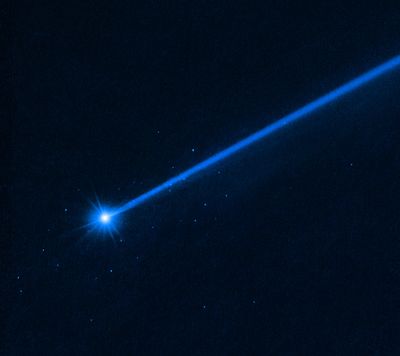


Just over a year after DART hit asteroid Dimorphos, new images from the event were made public on the Planetary Data System on October 31, 2023. They were taken by DART's companion LICIACube and cover the whole collision and some of the aftermath – and have now been turned into videos showing the event in a new light.
Citizen scientist Jacint Roger Perez, an amateur image processor from Barcelona, Spain, turned the raw images into stabilized videos showing the impacts in multiple ways. Perez shared the incredible footage on his X (formerly known as Twitter) account.
Many videos edited by Perez show the Didymos system before and after the impact, as well as videos showing how difficult it was to put them together, since LICIACube, Didymos, and Dimorphos were moving about a lot. This makes for an impressive feat of image processing and our best view yet of humanity moving an asteroid.
#LICIACube - #Luke - RGBtarget: #Didymos #Dimorphos NASA/ASI/j. Roger https://t.co/1TE3BJoXpp pic.twitter.com/If65C792hd— landru79 (@landru79)
NASA’s DART mission was the first time that humanity moved a celestial body. It demonstrated that our species is capable, if needed, of pushing an asteroid on a different orbit – something that could be useful if said asteroid was on a collision course with Earth. DART slammed into asteroid Dimorphos and the consequence of the impact.
#LICIACube - #Luke - target: #Didymos #Dimorphos NASA/ASI/j. Roger pic.twitter.com/S8Jqoqv4d7— landru79 (@landru79)
Dimorphos is the moon of asteroid Didymos and DART shorted its period by about 34 minutes and made it shed boulders. The whole event couldn't be recorded on camera from the spacecraft - it was a one-way trip into the asteroid after all - so the Italian Space Agency (ASI) had LICIACube hitching a ride on DART. And we are finally seeing those details, with hopefully even more to come.