Humans
 PUBLISHED


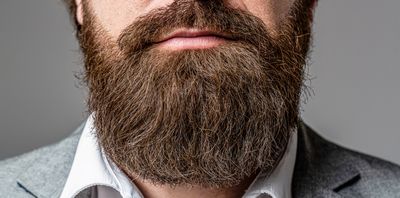


From Dick Dastardly to Jay Leno, there are some pretty recognizable signature chins out there. In fact, as a species, our chins are arguably our most definitive feature, as no other animal on the planet possesses this knobbly facial quirk. And there’s good reason for that. As it turns out, chins don’t do anything. According to a new study, they only exist because when evolution designed our heads, we ended up with some extra space at the bottom of our jaws that had to be plugged by a useless lump of bone.
"The chin evolved largely by accident and not through direct selection, but as an evolutionary byproduct resulting from direct selection on other parts of the skull," explained study author and anthropologist Noreen von Cramon-Taubadel, PhD, professor and chair of the University at Buffalo Department of Anthropology in the College of Arts and Sciences, in a statement. The chin is therefore what’s known as a spandrel – a useless evolutionary feature named after the empty triangular spaces that are created by the construction of archways in buildings.
However, the forces that led to the emergence of this superfluous facial area in humans are not entirely clear. What we do know is that Homo sapiens are the first and only primate to have a chin, with none of our closest relatives – such as Neanderthals, Denisovans, or the great apes – displaying this feature.
Von Cramon-Taubadel and colleagues therefore conducted an evolutionary analysis of hominid craniofacial characteristics in order to determine which of these were driven by natural selection and how this might have led to the emergence of a chin in modern humans. Overall, they found that chins seem to have appeared as the angle of our cranium changed to accommodate a larger brain, while our lower face became smaller due to a reduction in the size of our teeth.
These changes went hand-in-hand with the emergence of bipedalism – the ability to walk upright on two legs – and became increasingly pronounced as we developed into the brainy, gracile Homo sapiens that we are today. At the same time, these highly adaptive evolutionary traits altered the angle of our jaw, resulting in the creation of a chin.
To confirm that the human chin truly is a spandrel, the study authors applied the same evolutionary analysis to various aspects of the chin itself, and found that the majority of these do not appear to display any signal for natural selection.
"Just because we have a unique feature, like the chin, does not mean that it was shaped by natural selection to enhance an animal's survivability, for example, a buttress for the lower jaw to help dissipate the forces of chewing," said von Cramon-Taubadel. "The chin is likely a byproduct, not an adaptation."
In other words, it came into existence because of the way natural selection shaped other areas of our jaw and skull. So while the chin itself might not actually do anything, we wouldn’t have been able to evolve in the way that we have without it – which seems like a good enough reason to keep your chin up.
The study is published in the journal PLOS One.



 8
8