Space and Physics
 PUBLISHED




Christmastime and astronomers have more in common than you may think. Dark, crisp and clear nights are perfect for stargazing and, of course, the star of Bethlehem (which, being Italian, I've always known as the Christmas comet) features rather prominently, so astronomers feel a strong connection with the holiday season.
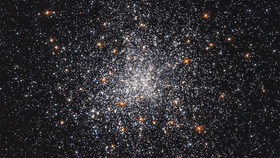
And what better way to celebrate this connection than NASA releasing this gorgeous Hubble "Snow Globe" image.
The space telescope snapped this beautiful image of globular cluster M79, which thematically resembles the swirling snowstorm of glitter inside a snow globe. M79 is located outside the Milky Way, 60,000 light-years from the galactic center and 42,000 light-years from us.
And, of course, it wouldn’t be Christmas without a little bit of controversy and a family fight. Some astronomers think that M79 might not have formed in the Milky Way but may have escaped the Canis Major overdensity, a region 25,000 light-years from Earth. The dispute is about the nature of the overdensity, with some astronomers believing it is actually a separate dwarf galaxy while others argue that the evidence strongly suggests it is just a warped, weird bit of our own galaxy.
But no matter its origin, I'm sure we can all agree that it is a beautiful picture.