Health and Medicine
 PUBLISHED
 3
3


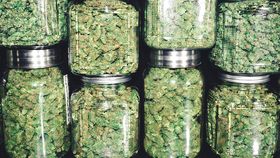


A new study has taken a look at the effect legalizing cannabis in the US has on the sale of junk food like cookies, ice cream, and chips.
Previous studies have looked at the direct effects of cannabis on health, but this is the first study of its kind to look into – and find – a causal relationship between legal cannabis and junk food sales. Though recreational drugs all come with their downsides, it's often been found that cannabis is far safer than the world's favorite drug, alcohol, which is associated with 2.8 million deaths each year.
With the legalization of cannabis across many states in the US being fairly recent, the opportunity to study other knock-on effects, such as how the drug affects driving performance (spoiler alert: It's not famed for giving you superhuman reflexes) and workplace fatalities, is just beginning.
A team from Georgia State University decided to look at the effect of legalization on junk food consumption, publishing their findings in Economics & Human Biology. It may sound a little frivolous, until you consider that some 42 percent of the US population are considered obese, according to the Centers for Disease Control and Prevention.
The researchers took retail scanner data on purchases of high-calorie food, using differences in timing of the introduction of recreational cannabis use laws across different states in order to measure the effects of legalization on sales. You will likely not be shocked to find that legalization of cannabis was linked to an increase in sales of junk food.
"In [Recreational Marijuana Legalization] RML states monthly sales of junk food increased by 3.2 percent and 4.5 percent when measured by volume," the team wrote in their study. "Specifically, in counties located in RML states, monthly sales of high-calorie food increased by 3.1 percent for ice cream, 4.1 for cookies, and 5.3 percent for chips."
Despite stoner stereotypes, the team notes that there is actually very little formal causal evidence to support the link between cannabis and food consumption, though pretty much every weed user will likely anecdotally confirm they have at some point gotten the "munchies".
"Our research appears to be the first that causally links cannabis consumption to junk food consumption," the team wrote. "Our findings may be particularly relevant from a policymaking perspective, at a time when more states are considering legalizing marijuana consumption while battling an obesity epidemic and when different countries have already fully legalized or are considering legalizing consumption."
Though increased junk food consumption is by no means a good thing for health, there are other factors to be weighed up by policymakers, such as the finding by the same authors that legalization of cannabis was associated with a 12.4 percent drop in alcohol sales. Nevertheless, the research highlights that there may be unpredictable consequences for legalization.
“You think marijuana does no harm — that’s pretty much the consensus today,” co-author Alberto Chong told The Academic Times. “But there are unintended consequences, and one of them is the fact that you really get very hungry and you start eating crap.”