Health and Medicine
 PUBLISHED


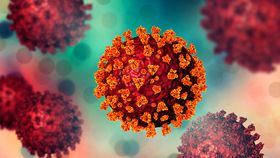


Two coronaviruses closely related to SARS-CoV-2, the virus that causes Covid-19, have been found in animals stored in lab freezers in Japan and Cambodia. They are the first SARS-CoV-2 relatives found outside China, where Covid-19 was first reported last year.
The viruses were found in frozen horseshoe bats stored in a lab in Cambodia, and in frozen bat droppings in a Japanese lab, Nature News reports.
In the ongoing quest to try and pinpoint SARS-CoV-2's origin, researchers, supported by a World Health Organization investigation, are trying to narrow down the animal vector of the Covid-19 pandemic.
The most likely suspect is horseshoe bats, but how it jumped from animal to human, and whether it went through an intermediate animal, is not known. How viruses cross the animal-human barrier can take years to unravel, but finding its origin is essential for preventing further introductions into human populations.
If the viruses are closely related to SARS-CoV-2, they could help scientists identify how it passed from bats to people. However, they would have to share more than 97 percent of their genome with SARS-CoV-2 to provide such insights, which is more than any current known Covid relative, researchers from the Pasteur Institute in Cambodia who found the samples told Nature.
The virus in Cambodia was discovered in two Shamel's horseshoe bats (Rhinolophus shameli) captured back in 2010 by researchers searching through old samples in the hope of helping the pandemic research. So far, about 70 percent of the virus's genome has been sequenced. A short segment was identified as very similar to both SARS-CoV-2 and RaTG13, a bat coronavirus that is one of the closest known relatives to the pandemic virus. RaTG13 shares 96 percent of its genome with SARS-CoV-2, and it's thought diverged from a common ancestor sometime between 40-70 years ago.
We won't know how closely the new virus is related until the entire genome is sequenced and their discovery published, so it is still very early days for what it can tell us, and how significant that information may be regarding the current pandemic.
The second virus found in Japan was identified in frozen bat droppings of a little Japanese horseshoe bat (Rhinolophus cornutus) captured in 2013. According to a paper published in Emerging Infectious Diseases, the virus, Rc-o319, shares 81 percent of its genome with SARS-CoV-2, which means it is too distantly related to the pandemic virus to offer insights into its origin. However, its discovery, along with the Cambodian virus, shows that viruses related to SARS-CoV-2 are common in Rhinolophus bats across Asia, which opens up a new concentrated target area for research.
Whether the new Cambodian virus will overtake RaTG13 as the closest relative to SARS-CoV-2 or not, identifying similar viruses in the animal vector most likely to be linked with Covid-19 could help us understand how this particular virus made the jump from animal to human, and help us both anticipate, and possibly even prevent, future pandemics.
[H/T: Nature News]