Health and Medicine
 PUBLISHED
 2
2

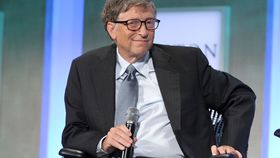


Writing for The Wall Street Journal, Bill Gates disclosed his best ever investment and no, it's not Microsoft. The philanthropist and technology magnate says the money funneled into global health groups who buy and distribute medicine has paid off the most in the long run – both in terms of lives saved and money spent.
"Technology is a boom-or-bust business, but it’s mostly busts. I’ve always assumed that 10% of my technology investments will succeed – and succeed wildly. The other 90% I expect to fail," he wrote.
Gates admits that when he first left Microsoft for philanthropy, he thought his success rate would remain stable. "Discovering a new vaccine, I figured, would be just as hard as discovering the next tech unicorn," he explained. But he was wrong – vaccines are harder.
However, after two decades in the field, there is one type of investment whose success has surprised him and, as mundane as it may seem, that is the purchasing and distribution of medicines already in existence.
"Buying medical supplies and getting them where they’re needed may sound easy, even boring, but it isn’t," he continued. "Saving lives in developing countries often means getting medicines to remote villages and war zones."
And over the last 20 years, the Bill and Melinda Gates Foundation has committed $10 billion to doing just that. Gates names three organizations (Gavi, the Vaccine Alliance; the Global Fund; and the Global Polio Eradication Initiative) that have been responsible for taking some of that $10 billion and turning it into lives saved. Combined, they have helped deliver vaccines, medications, bed nets, and other supplies to fight diseases including malaria, AIDS, Tuberculosis, and polio to millions of people across the developing world.
"These organizations are not trivial or expendable. In fact, they are probably the best investments our foundation has ever made," Gates added.
According to Gates, the impact has been significant. In the space of 19 years, for example, the number of deaths of under-fives living in low- and middle-income countries has fallen 40 percent. Meanwhile, deaths caused by AIDs have halved since the turn of the millennium and polio cases have shrunk spectacularly, with only 31 reported in the whole of 2018.
"Obviously, the key thing here is that they’ve saved lives," Gates wrote. "But they’ve also been successful in the way that investments traditionally are: They’ve created a lot of wealth, because when people aren’t sick in bed, they can go to work or school."
Based on calculations made by the Copenhagen Consensus Center, a nonprofit think tank that examines and prioritizes solutions to global problems on a cost-analysis basis, Gates has been able to compare the economic success of these initiatives to those of other possible solutions. For example, had that $10 billion been invested into energy products, the return would been $150 billion. Infrastructure, $170 billion. Standard & Poor's 500 (with the balance given to developing countries 18 years later), a measly $12 billion – or $17 billion if you include dividends.
Instead, by investing that $10 billion into the buying and selling of medicine and other supplies, they have reaped approximately $200 billion in social and economic benefits. And, we have to say, that is pretty impressive.