Health and Medicine
 PUBLISHED
 1
1


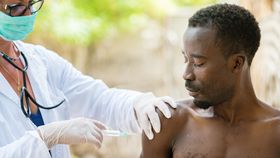


One of the reasons people are still becoming infected with HIV is the virus comes in different strains, and it is hard to design a single vaccine that works against all of them. However, a vaccine that has already produced encouraging results against the HIV strains in Thailand has now been found to produce an even bigger immune response to the most common forms in South Africa, raising hopes it could be effective in one of the most AIDS-hit countries.
The rest of this article is behind a paywall. Please sign in or subscribe to access the full content.As therapies have turned HIV infection from a death sentence to a manageable condition for those who can afford them, the threat of AIDS has faded from the mind of wealthier nations. Yet globally HIV is still one of the largest killers, taking almost a million lives a year, and forcing many others to spend more than they can afford on drugs to keep themselves alive. Only a vaccine will change this.
Several experimental versions have been tried, with varying levels of success. None are ready for widespread use, but RV144, which reduced infection rates by 31 percent compared to a placebo in Thai trials is seen as a promising stepping stone.
HIV has mutated in its travels, and different strains are dominant in different regions. Those common in Thailand and South Africa, known as clade B and C respectively, are significantly different. Dr Glenda Gray of Witwatersrand University gave a 100 HIV negative South Africans the RV144 vaccine as part of a phase1b trial and tested for anti-HIV antibodies and T cell responses.
The immune responses of the South Africans were actually slightly stronger against clade C HIV viruses than the Thai responses against clade B. For example, the IgB antibody produced by people given the vaccine bonded more strongly in test tubes to South African versions of the virus than to Thai ones. In Science Translational Medicine, Gray notes the stronger responses occurred irrespective of the age or sex of those given the vaccine.
This suggests that, if a similar trial was run among South Africans, the protection against HIV infection would be at least as strong.
In some circumstances, a vaccine that reduces infections by less than a third might still be worth making widely available. Not only would it save the lives of those it protected, but it would provide weak herd immunity for everyone else, potentially causing rates of transmission to spiral down not up.
However, things are more problematic with HIV, because there are concerns people who are vaccinated may be more likely to engage in risky behavior, such as failing to use condoms. Consequently, RV144 will need to be improved before it can be widely deployed, on any continent. Nevertheless, Gray's work suggests the goal is getting close.