Health and Medicine
 PUBLISHED





What you'll discover in this article
- A newly developed technique uses CRISPR gene editing to remove the Y sex chromosome and thereby produce female clones from male mice.
- Dr Shogo Matoba at the RIKEN research institute in Japan told IFLScience about the "remarkable" experiments his team conducted.
- The cloning breakthrough could potentially help save severely endangered species, especially those with only a single male individual left. But there are limitations that mean its use beyond mice could be challenging.
A male animal can only produce a male clone, and vice versa – at least, that was the case until now. In a breakthrough they describe as “strange and fascinating,” scientists in Japan have broken that rule by engineering fertile female clones from male mice.
They then introduced these opposite-sex clones to their original donor and bred a new generation of fertile mice.
The study is yet to be peer-reviewed, but IFLScience spoke to the Japanese scientists behind the research, who explained how their techniques could make a real impact in the world of animal conservation.
Female clones, male donors
In a technique called “dual-sex cloning," scientists at RIKEN BioResource Research Center and the University of Yamanashi in Japan took male mice (with XY chromosomes) and removed their Y chromosomes early in their development using a CRISPR gene-editing technique called Y-CUT.
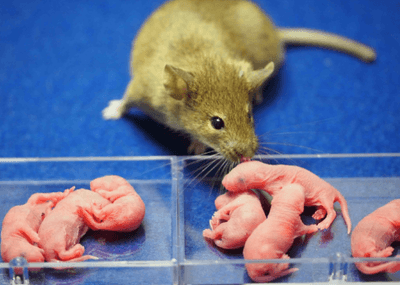
The engineered embryos were transferred to surrogate mice, which gave birth to female pups with the sex chromosomes XO (meaning they have one X chromosome and no Y chromosome). The female mice were genetically identical to the original male, except for this single sex chromosome.
Seeing female pups born from a male donor was quite remarkable
Shogo Matoba
“The most exciting moment was actually when the first female clone was born from a male somatic cell,” Dr Shogo Matoba, author of the paper and a senior reasearcher at RIKEN Bioresource Research Center, Japan, told IFLScience.
“We knew theoretically that removing the Y chromosome could produce an XO female from our IVF embryo experiments, but actually seeing female pups born from a male donor was quite remarkable,” the scientists commented.
While female clones have been born from male mice before due to accidental loss of the Y chromosome, this is the first time this has been done intentionally. Previously, researchers have also produced mice from two male parents by cultivating eggs from male cells.
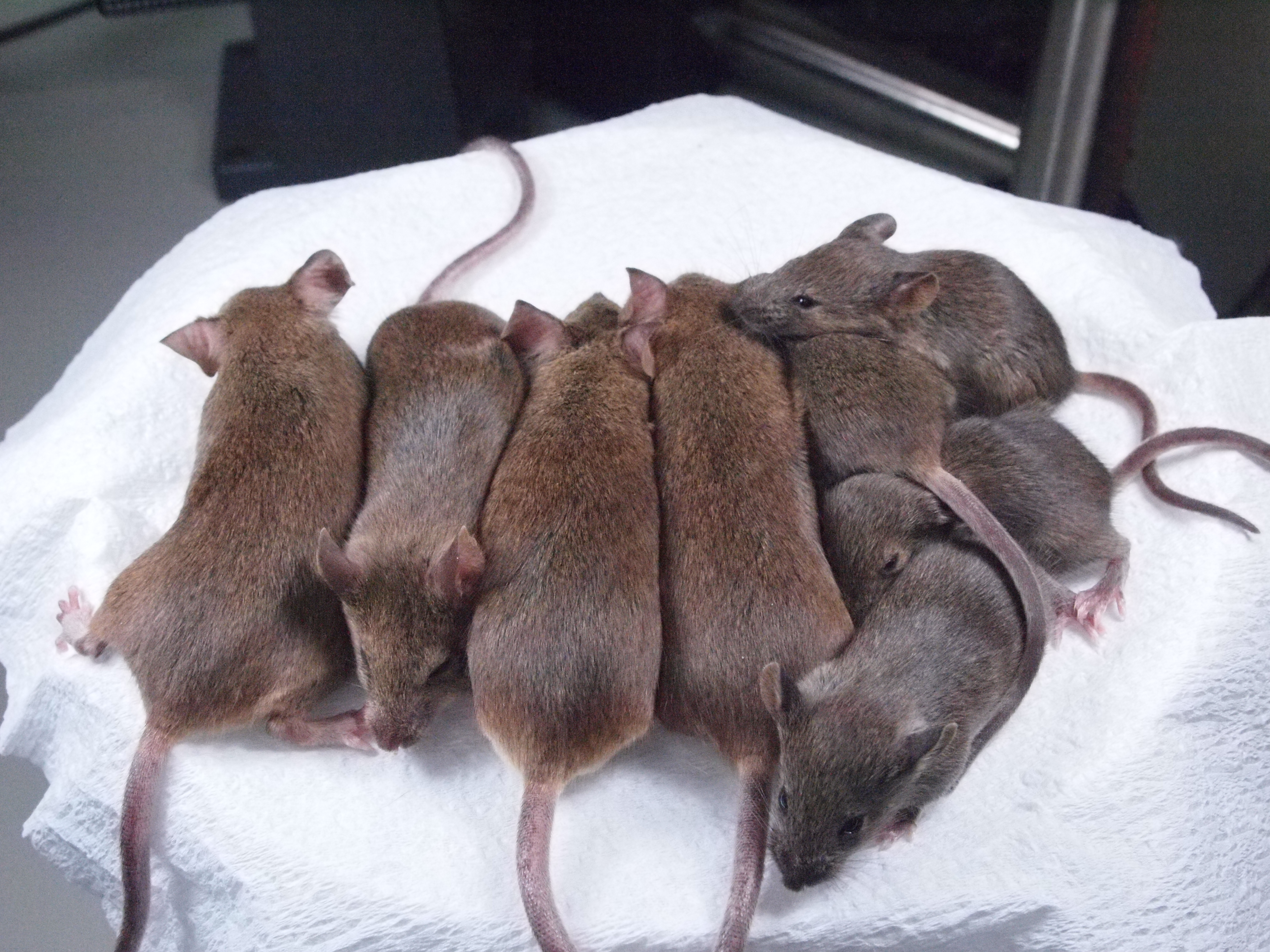
Mice are fairly unusual in that they can function relatively well with just one X chromosome. XO female mice can be healthy and fertile, just as these clones were. However, this isn’t the case in most other mammals. Cattle, pigs, dogs, and horses with XO can sometimes survive, but they typically have reproductive abnormalities or infertility issues.
It was certainly a strange and fascinating situation
Shogo Matoba
In humans, an XO chromosome causes Turner syndrome, a rare genetic condition affecting women that causes short stature, a webbed neck, and underdeveloped ovaries leading to infertility.
The researchers went even further down this rabbit hole by mating XO female clones with the original male donor, and they successfully produced offspring.
“It was certainly a strange and fascinating situation – the female clone carries essentially the same autosomal genome as the male from which her donor cells originated,” explained Matoba.
“We went one step further and also mated an XO female clone with an XY male clone generated from the same original male. They were also fertile and produced healthy offspring.”
How could this biotechnology help endangered animals?
While undoubtedly peculiar, this isn't a case of "mad scientists" bending natural laws for the sake of it. The researchers explain that their experiment demonstrated that a reproductive cycle could be initiated from a single male genome, which could prove to be very useful for conservationists battling against an animal's impending extinction.
“Somatic cells from endangered animals are increasingly cryopreserved in biobanks such as the Frozen Zoo, and endangered animals have already been cloned from such stored cells using somatic cell nuclear transfer,” Matoba stated.
“If only male cells from a valuable individual are available, our approach could potentially expand the reproductive potential of that genetic resource by generating individuals of both sexes, provided that XO females are viable and fertile in that species,” he added.
Take, for instance, Lonesome George, the last remaining Pinta Island tortoise, or Toughie, the last known Rabbs' fringe-limbed tree frog, who died in captivity on September 26, 2016. If it were possible to kick-start a reproductive cycle from these single male endlings, it could theoretically be possible to save a species.
Granted, the genetic diversity would be near-zero, but it could open up new avenues until conservationists find other means, such as gene editing or newly discovered genetic material, to widen the gene pool back out.
The new research is posted on the preprint server bioRxiv.


 1
1