Humans
 PUBLISHED




At a site in northern Peru, archaeologists have made a gruesome discovery.
Among 47 tombs containing over 100 treasures, researchers have found the remains of at least 12 children who they believe were sacrificially killed, reports Newsweek. Once belonging to the Chimú civilization, they may have been slaughtered in a bid to bring rain to the parched landscape.
The Chimú culture is thought to have risen out of the Moche culture sometime around 900 CE, with their pottery and artifacts showing significant crossover. It was all contained within a narrow strip of land some 32 to 160 kilometers (20 to 100 miles) wide, sandwiched between the Pacific Ocean on one side and the Andes on the other.
While today this region seems inhospitable and barren, back then the belt of land had multiple rivers that wound their way from the foothills of the mountains. The flat land meant that irrigation and agriculture was easy and bountiful, while the rich oceans filled their nets with fish and other maritime treats, allowing the culture and society to flourish.
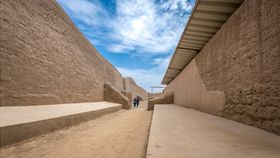
So plentiful was this environment, in fact, that it allowed the Chimú to build what is believed to be the largest pre-Columbian city in all of South America, at a site known as Chan Chan. Spanning 20 square kilometers (7.7 square miles), the city was immense and built almost entirely from mud bricks. The Chimú culture continued to craft fine metal objects, cloth, and ceramics until the Incan Empire conquered them around 1470, just 50 years before the Spanish showed up.
But this was all based on an agricultural system that was heavily reliant on the rains. The rivers that fed the fields, snaking their way down from the Andes needed the seasonal precipitation to be regular and predictable. It is when this started to slip that the archaeologists suspect the Chimú people had to turn to ever more drastic measures.
One of these might have been child sacrifice. “What they [Chimú] wanted to do with the presence of the children in this arid area is to attract rain, to improve cultivation,” says the director of the archaeological site, Victor Campos, to Newsweek. The remains of the children apparently show cuts to their ribs, which the archaeologist suggests may have been the result of an attempt to remove the hearts of the unfortunate adolescents.
They were found along with almost 50 other tombs, containing a whole wealth of treasures, of which the archaeologists are now working their way through.

 1
1