Humans
 PUBLISHED
 1
1


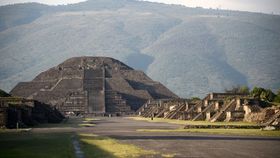


The Pyramid of the Moon in modern-day Mexico has been holding on to a big secret. Building on dozens of archaeological investigations over the past 300 years, a recent survey of the pyramid has discovered a hidden tunnel that leads to a 15-meters-across (50 feet) chamber deep within the heart of the structure.
Archaeologists believe that this mysterious cavity might have once been a funerary space used for rituals of the dead, with the deep warren of tunnels acting like a passage to the underworld.
The discovery was recently announced by archaeologists from Mexico’s National Institute of Anthropology and History (INAH) working in collaboration with geophysicists from the National Autonomous University of Mexico, at the Archaeological Zone of Teotihuacán around 40 kilometers (25 miles) northeast of Mexico City. Back in the summer of 2017, they used an electrical resistivity technique that allowed them to gauge the geologic properties of the earth, all without breaking any ground.
Initial results from that work hinted that the pyramid might contain some kind of secret passage, however, this is the first time they’ve confirmed the presence of a lost chamber. They also believe they have located the entrance to the tunnel too, raising further hopes that we could someday explore its hidden riches.
"In the explorations carried out at the pyramid in the 1980s, archaeologists Rubén Cabrera and Saburo Sugiyama found skeletons of individuals with skull deformations… and diverse green stone objects (necklaces, human figures made with mosaics), so it is not difficult to think that something similar could be found in the subsoil,” Dr Verónica Ortega, director of the Integral conservation Project for the pyramid said in a statement.

"The tunnel is located to the south of the Plaza de la Luna, but it is likely that there is another entrance to the east side, so it is essential to have a complete radiography to know where its entrance is," said Dr Ortega.
The Pyramid of the Moon, or Meztli Itzácual, can be found in the present-day city of San Juan Teotihuacán, once the site of the ancient city of Teotihuacán, established around 150 BCE by a Mesoamerican culture. It’s the second largest pyramid in the area, only matched by the even flashier Pyramid of the Sun. As you can tell by their size and grandeur, both pyramids obviously played a deeply important role in this society, most likely a sacred space for ritual and sacrifices.
Between 1998 and 2004, archaeologists discovered the remains of almost 200 animals, including pumas and wolves, found in tunnels underneath the pyramids. Who knows what they'll find in these tunnels and chamber.
"These large offering complexes are the sacred core of the city of Teotihuacán," Dr Ortega said. "[H]ence what can be found inside can help unravel the relationships that this ancient metropolis had with other regions of Mesoamerica. "