Humans
 PUBLISHED





How did early human ancestors obtain their food? It may sound like a trivial question, but it has significant implications for understanding our evolution. In particular, assessing how early human species established their ecological niche, what they ate, and how they obtained it can offer clues as to how our brains evolved and how this affected social changes.
Now researchers have shown that our ancestors were both successful scavengers and effective foragers who were capable of accessing, processing, and sharing animal resources across varied environments.
Animal carcasses were an important way for ancient humans to gain calories, but how did we get our hands on them? For decades, scientists have debated whether our early ancestors scavenged or hunted. Early interpretations favored the idea that humans were opportunistic scavengers, while later ones prefer that we were hunters or confrontational scavengers.
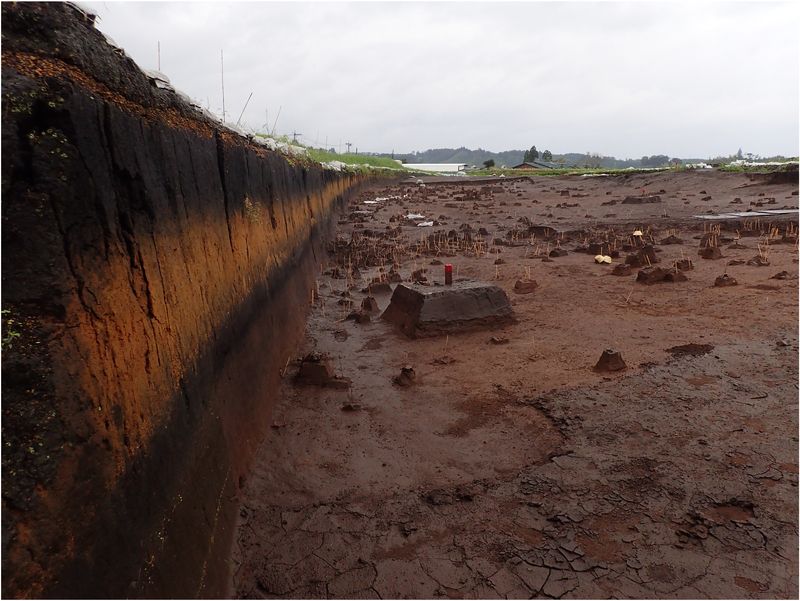
In this latest study, researchers examined 1.6-million-year-old animal fossils found at the famous archaeological site known as the Koobi Fora Formation in northern Kenya. The team discovered that early human ancestors weren't just eating the meat they obtained, they were also butchering it, selectively transporting parts of it, and systematically processing it.
Koobi Fora Formation is in the Turkana Basin and holds one of the longest and most continuous Plio-Pleistocene – an era combining the Pliocene (about 5.3 to 2.6 million years ago) and the Pleistocene (about 2.6 million to 11,700 years ago) – records in Africa. It contains a rich array of fossil evidence, which is ideal for assessing behavioral changes in early hominins.
While studying over 1,000 fossilized bones from the site, which mostly belonged to antelopes and other herbivores, the researchers found evidence of scratches and pits on some specimens. The microscopic marks can tell us whether the bones were chipped by stone tools or the teeth of predators.
The researchers found that throughout the assemblages they examined, the bones displayed few carnivore tooth marks. This suggests hominins played a substantial role in whatever happened to these animals. In addition, the concentration of cut and percussion marks along long-bone shafts – like those on the middle of leg bones – indicate systematic defleshing and marrow extraction.
Because the assemblages contain a large excess of limb bones compared with other types of bones, the team believes these hominins chose portions of the body that could be easily transported to safe places for consumption. If they were eating at the same place the animal died, you would expect to find whole skeletons on site. But this wasn't the case.
“The limb-dominated profile aligns with selective transport models, indicating that early Homo prioritized the processing of high-return, low-effort carcass parts,” the team explains in their paper.
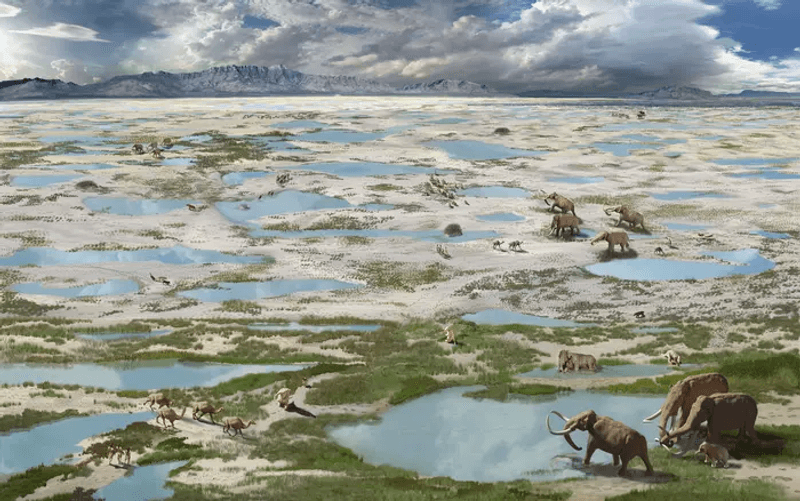
The archaeological assemblages mentioned in this study all came from areas that were once wetland environments. These habitats provided reliable water and abundant aquatic plants that would have attracted grazing herbivores. The recurrence of these assemblages across these habitats indicate that this ecological strategy wasn't unique to one group of hominins, but was a wider opportunistic foraging strategy.
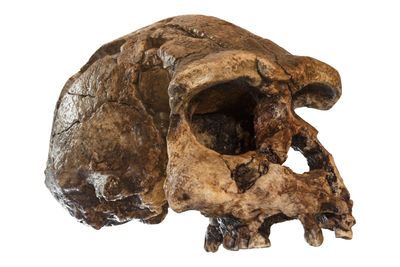
“These results address long-standing questions about early Homo evolution, including how this lineage adapted to environmental instability, expanded into new environments, and whether the emergence of [Homo] erectus coincided with shifts in meat consumption or cooperative behaviors such as food sharing,” the team explain.
It seems natural selection favored traits that allowed populations to persist amid environmental fluctuations, rather than those that allowed a population to specialize in a single setting.
“The behavioral pattern documented here provides a concrete archaeological expression of this adaptive flexibility, showing that a consistent carcass-exploitation strategy was sustained across environmental heterogeneity and shifting competitive regimes,” the authors add.
“In this context, flexibility refers to the breadth of ecological settings in which this strategy could operate, rather than frequent shifts in foraging mode.”
Ultimately, the research demonstrates that meat processing and consumption was a feature of early human lifestyles and wasn't specific to one species, e.g. Homo erectus, as was previously assumed. It also shows that there were evolutionary benefits to food sharing as a strategy to buffer against short-term variability in accessing meat. It meant that no individual necessarily risked going hungry or being put in danger by trying to obtain more food.
That paper is published in PNAS.