Humans
 PUBLISHED




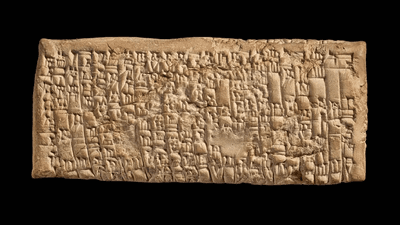


If you have been on the internet in the last 10 years, you might have come across a fascinating cuneiform letter and its recipient merchant, Ea-nāṣir, who lived in ancient Mesopotamia. The letter is a complaint, believed to be the oldest complaint letter ever written, from around 1750 BCE. When this was recognized by Guinness World Records in 2015, it catapulted Ea-nāṣir to internet fame, becoming a meme so popular it has defied the typical short attention span of the internet.
Often called the worst copper merchant in all of Mesopotamia, Ea-nāṣir was most likely not that bad. He brought copper from Dilmun to the palace of the ancient city of Ur, famous for its impressive Ziggurat, located in what is now Iraq. This was during the Bronze Age, when copper was a fundamental commodity used for metal works, weapons, armors, and shields. It was the cutting edge of technology at the time; the equivalent of someone trading in microchips today. So if you believed you were given a sub-par product, you’d definitely complain.
This is what a fellow copper merchant, a man named Nanni, did. The tablet he wrote describes the many complaints he put against Ea-nāṣir. The latter allegedly delivered the wrong grade of copper after his Persian Gulf voyage to collect the metal. He was also responsible for misdirection and delays in delivery. And to add insult to injury, he was rude to the servants Nanni sent to collect his order.
My favorite Internet theory is that he had a humiliation kink, so that's why he kept his stuff.
Professor Gabriel Moshenska
The infamous tablet is one of many pertaining to quite boring and dry business correspondence. Why it was saved isn't known, but there are several theories, some more convincing than others.
“My favorite Internet theory is that he had a humiliation kink, so that's why he kept his stuff,” the paper’s author Professor Gabriel Moshenska, from University College London, told IFLScience while laughing. “I think it's just business records!”
“I had a mature student with a background in business, she said: ‘To me this kind of correspondence is not unusual. They would work together again; this is not like the end of a business relationship.’ Just standard business correspondence being filed away is my theory.”
In the new work, Moshenska looked at how Ea-nāṣir became more than a historical figure. Thanks to the internet, he became a meme that has lasted for over 10 years, longer than most, which end up "lost in time, like tears in rain". The meme's endurance is probably the result of more than just a single factor.
“I think people like historical villains. I think people like stories of scammers, crooks, all those kinds of things. It appeals to people. It makes the past seem more human. People like that sense that people in the past were just like us. That people in the past weren't just, you know, priests and prophets. There were people you could relate to. And I think being scammed is something that, sadly, I think most people can relate to,” Moshenska told IFLScience.
“Then there's just a weird world of memes, and the weird world of social media where the most random things get picked up and become in-jokes.”
The memes of Ea-nāṣir have been extremely varied: standalone, meta-memes, and memes connected to breaking news. As a symbol of shady business practices, Ea-nāṣir has become connected to Donald Trump on numerous occasions, including one suggesting the ancient Mesopotamian was joining the Trump administration.
Copper remains a valuable resource today, and one whose trade is still high-stakes enough to result in fraud. Commodities trader Mercuria bought $36 million worth of the metal in 2021 and received rocks painted to look like copper instead. The internet was quick to point the finger at Ea-nāṣir.
Beyond the memes, Moshenska believes this is doing a world of good for archaeology.
Come become part of the world of archaeology. We need more nerds!
Professor Gabriel Moshenska
“As an archaeologist, I love that people are engaging with the ancient world in this way,” Moshenska told IFLScience. “There's no right or wrong way of getting interested and engaged in the archaeology of the ancient world. If this is the weird, stupid thing that gets people to visit the museum, to read about ancient Near-Eastern archaeology – and I know it is – I think that's wonderful. I think that's amazing!”
“To those people, I love you! Come become part of the world of archaeology. We need more nerds!”
None of us will know how we will be remembered. The best we can do in life is to live in such a way that people speak kindly of us. And maybe if you keep records, make sure the ones that paint you in a positive light are there as well, or your legend might be very unflattering indeed.
The paper is published in the Journal of Contemporary Archaeology.