Health and Medicine
 PUBLISHED


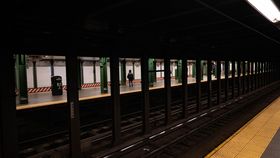


The Covid-19 death rate of New York City this past spring looked startlingly similar to the number of deaths seen during the 1918 Spanish flu pandemic, scientists from Harvard Medical School have warned in a new study.
Their research, published in JAMA Network Open, found that deaths linked to the Covid-19 pandemic in New York between March and May were on par with the peak death rate seen in October and November during the 1918 influenza pandemic. There were around 287.17 deaths per 100,000 person-months (a way of denoting deaths over time) during the peak of the 1918 influenza outbreak in New York City, compared to 202.08 deaths per 100,000 person-months during the first few months of the Covid-19 pandemic when the city was hit especially hard by the outbreak.
“If insufficiently treated, SARS-CoV-2 infection may have comparable or greater mortality than 1918 H1N1 influenza virus infection,” the study authors write.
The 1918 influenza pandemic, also known as the "Spanish flu,” was the worst pandemic in recent history. Estimates vary, but it’s widely considered to have wiped out over 50 million people across the world. Many similarities – and differences – have been drawn with the ongoing Covid-19 pandemic, but this is one of the first studies to compare their similarities in regards to excess deaths.

There are inevitably some limitations to these comparisons, however. The study points out that it’s not possible to directly compare the virulence of SARS-CoV-2 and the 1918 H1N1 influenza strain. This study also only covers a single city, which does not necessarily reflect the picture elsewhere in the US or beyond.
It’s notable that these two pandemics were dealt with under completely different historical backdrops, including gargantuan leaps in biomedical care and technology over the past century, so it’s unclear how many Covid-19 deaths were prevented because of modern interventions like ventilators and supplemental oxygen that weren't available 100 years ago.
Nevertheless, the researchers say their findings still make a valid point: this ongoing virus outbreak should not be underestimated
Through this study, the team hopes to highlight the magnitude of the Covid-19 and stress the importance of maintaining some social distancing measures until the rain has passed because this is undoubtedly the worst storm we’ve seen in a century.
“Recent polling indicates that a majority of individuals in the US believe that some states lifted Covid-19 restrictions too quickly,” the team wrote in their conclusion. “We believe that our findings may help officials and the public contextualize the unusual magnitude of the Covid-19 pandemic.”