Humans
 PUBLISHED
 12
12


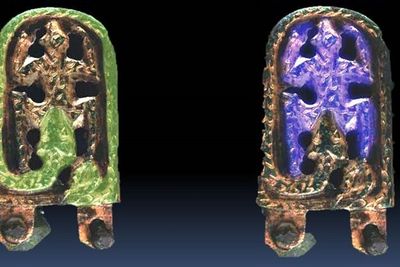


Archaeologists have unearthed a strange, early medieval belt buckle depicting a serpent-like creature, either a snake or a dragon, eating a frog. The bronze artifact may be a symbol from a previously unknown pagan cult that was once distributed across central Europe.
The belt buckle was discovered by a metal detector at an archaeological site near the village of Lány, which is about 32 kilometers (20 miles) west of Prague. Initially, the researchers believed the specimen’s design was unique, but further examination led to a startling discovery: there were more examples elsewhere in Europe.
“When the belt with the motif of a snake devouring a frog was discovered with the help of metal detectors at the site near Břeclav in southern Moravia, we thought it was a rare find with a unique decoration. However, we later found that other nearly identical artefacts were also unearthed in Germany, Hungary and Bohemia,” Jiří Macháček, head of the Department of Archaeology and Museology at the Masaryk University Faculty of Arts, explained in a statement.
“I realised that we were looking at a previously unknown pagan cult that linked different regions of central Europe in the early Middle Ages, before the arrival of Christianity.”
The symbol of a dragon or a serpent in some sort of conflict is a common cosmogonic motif in many creation myths from across the world, but the image of the snake and the frog could also be linked to fertility cults from central Europe.
“The motif of a serpent or snake devouring its victim appears in Germanic, Avar and Slavic mythology. It was a universally comprehensible and important ideogram. Today, we can only speculate about its exact meaning, but in the early Middle Ages, it connected the diverse peoples living in Central Europe on a spiritual level,” Macháček added.
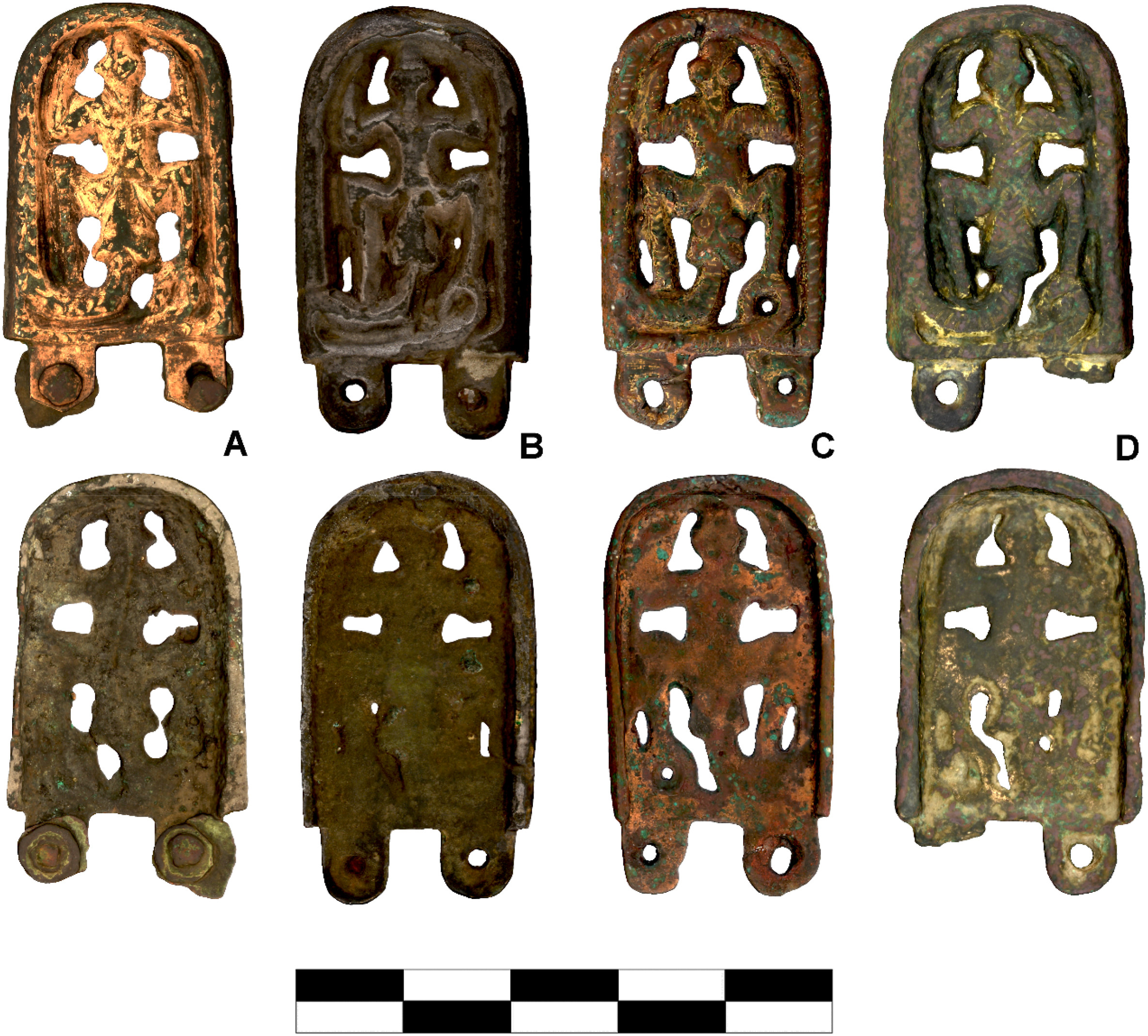
The Lány artefact appears to belong to a group called the Avar belt fittings, which were produced in Central Europe around the seventh and eighth centuries BCE. They would have been part of the costumes worn by the once-nomadic Avars, sometimes referred to as the Maharuls, who eventually settled in the Carpathian Basin, in modern Hungary. Their fashion was not unique to them, however, as it was often adopted by their neighbours, such as the Slavs.
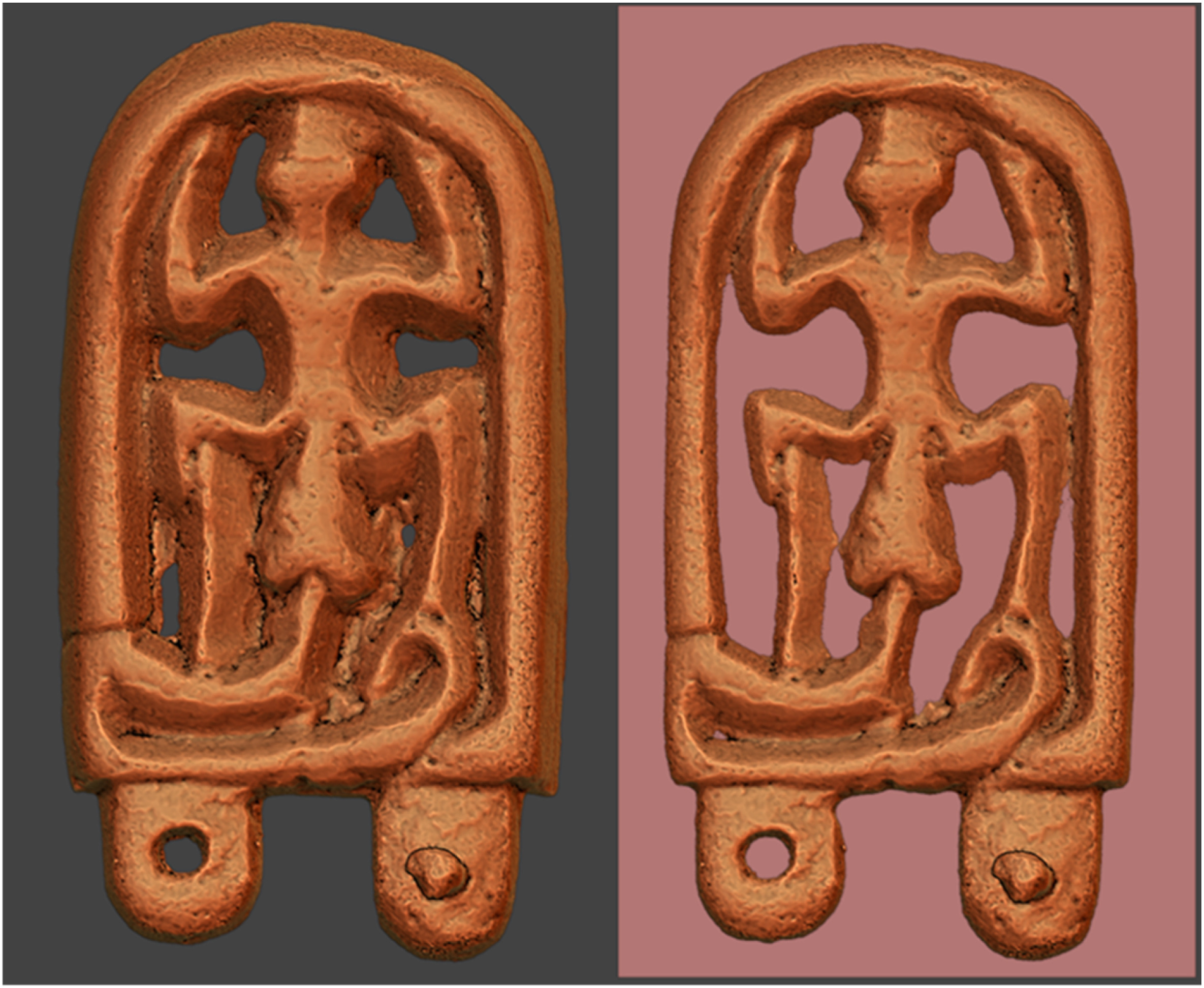
During their work, Macháček and colleagues subjected the buckle, as well as similar artifacts, to state-of-the-art methods, such as X-ray fluorescence analysis (EDXR), scanning electron microscopy (SEM), lead isotope analysis, and 3D digital morphometry.
The overall material and technological analysis revealed that most of the bronze fittings were once heavily gilded and were produced using a lost-wax casting method. In addition, chemical analysis of the lead isotopes contained in the bronze alloy allowed the team to isolate a common source of copper from which the fittings were made. The copper came from a mine in the Slovak Ore Mountains.
Finally, morphometric analysis of the 3D models suggested that some of the fittings were made in the same workshop, or at least shared a common model.
The study is published in the Journal of Archaeological Science.