Space and Physics
 PUBLISHED


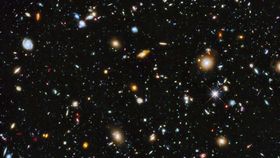


How galaxies came to form is a debated topic, and while the general details are understood, the particulars are very much open to interpretation. Now, a new study is providing some clues to exactly what happens.
Researchers from SISSA, in Italy, set out to understand the true mass distributions of galaxies during the first 1.5 billion years after the Big Bang. Their approach suggests that the biggest galaxies in the universe formed their stars locally and without interactions.
In the paper, published in the Astrophysical Journal, the researchers used the intrinsic relationship between star-formation, the mass of stars and the abundance of dark matter, which are well understood for local galaxies, and applied them to the very early universe.
“We started from the data, available in complete form only for the closer galaxies and in incomplete form for the more distant ones, and we filled the ‘gaps’ by interpreting and extending the data based on a scenario we devised,” said Claudia Mancuso, PhD student and lead author of the study, in a statement.
If their model is correct, the main engine behind the assembly of mass in the first galaxy is local star formation and not, as other models suggest, mergers or inflow of intergalactic gas. The largest galaxies we see today in the universe, the elliptical galaxies at the center of galaxy clusters, could have formed this way.
"There wasn’t enough time to accumulate the large quantity of stars seen in these galaxies through these processes,” added Mancuso.
Galaxies form from gigantic clouds of gas, stretching over many thousands of light-years inside dense clumps of dark matter. Inside these gravity reigns supreme, collapsing chunks of gas into the first stars. Our instruments have not observed these stars yet, so we are left speculating the exact details of how the first galaxies came to be. Future observatories like the James Webb Space Telescope will hopefully solve the mystery