Humans
 PUBLISHED
 2
2


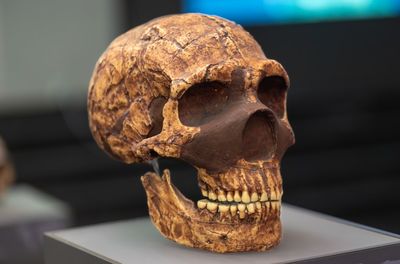


Lead exposure from modern chemical pollution is a well-documented threat to neurodevelopment and general health, yet a surprising new study reveals that this toxic heavy metal has, in fact, been impacting human evolution for more than two million years. What’s more, using lab-grown mini-brains, the study authors revealed that Homo sapiens is far more resistant to the effects of lead poisoning than the Neanderthals, which could explain why we thrived while our sister lineage became extinct.
In recent centuries, our main contact with lead has come via plumbing, paints, gasoline, and other industrial sources, leading to the assumption that the toxin only became a hazard at the onset of the modern era. However, after analyzing 51 teeth from fossilized ancient hominins and great apes – including early species like Paranthropus and Australopithecus africanus – the researchers found that lead exposure was in fact ubiquitous across Africa, Europe, and Asia throughout millions of years of human history.
Specifically, “lead bands” observed in tooth enamel suggest that the specimens all came into contact with the heavy metal during their childhoods, probably through volcanic dust, contaminated water or soil, and as a result of stress and illness, which can cause the body to release its own stores of lead.
“Our data show that lead exposure wasn’t just a product of the Industrial Revolution - it was part of our evolutionary landscape,” said study author Professor Renaud Joannes-Boyau in a statement. “This means that the brains of our ancestors developed under the influence of a potent toxic metal, which may have shaped their social behaviour and cognitive abilities over millennia.”
To learn more about how the toxin affected prehistoric hominins, the researchers turned their attention to a gene called NOVA1, which encodes a protein known to regulate gene expression in the brain in response to lead exposure. Previous studies have shown that modern humans possess a variant of this gene that differs from the archaic version expressed by Neanderthals, although the evolutionary pressures leading to the selection of the modern form have until now remained unclear.
The study authors therefore grew miniature brain organoids in a laboratory, which they then subjected to lead exposure. Following contamination, organoids possessing the Neanderthal variant of NOVA1 exhibited disruptions to a key gene called FOXP2 within neurons that are associated with speech and language development.
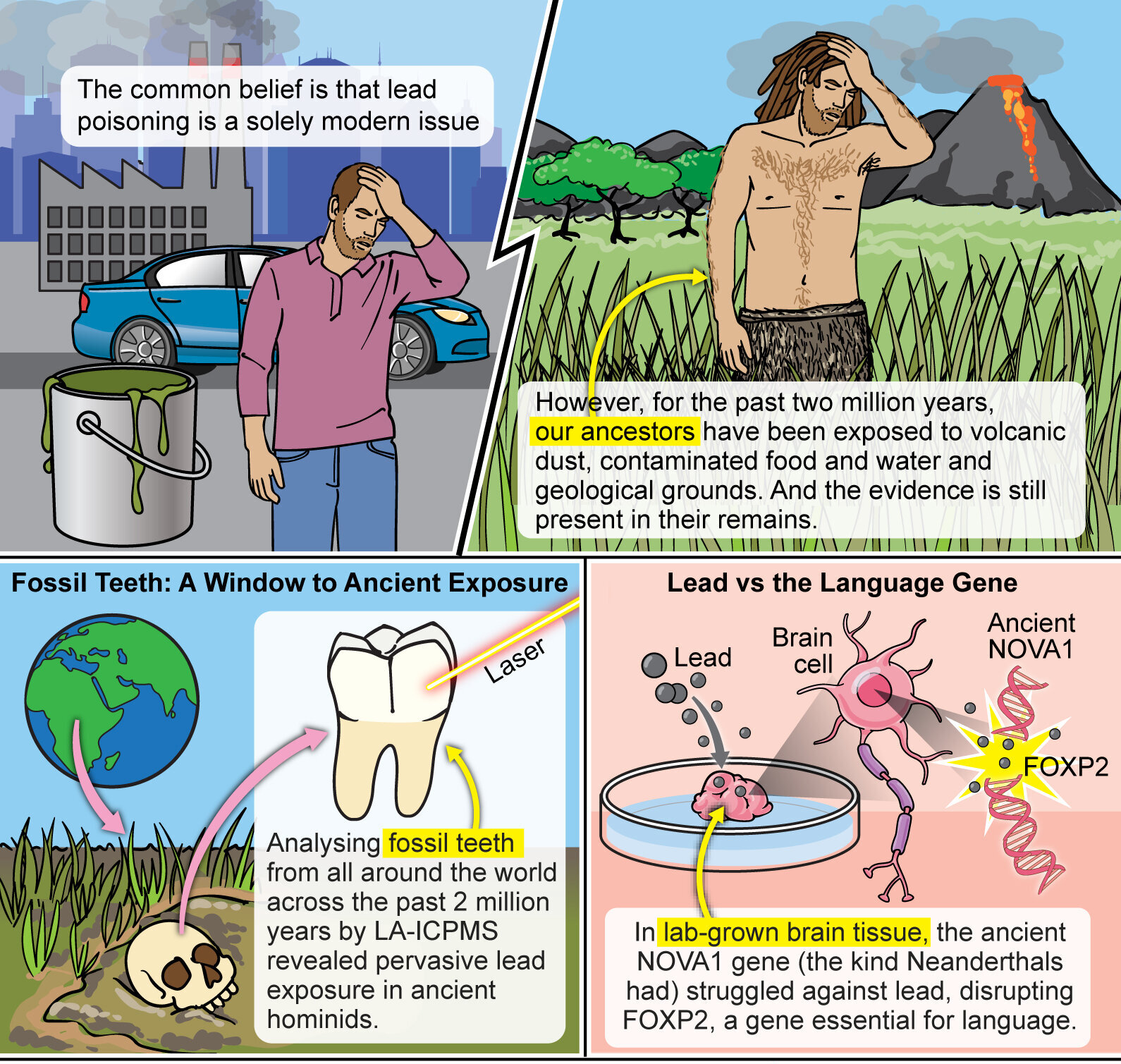
In contrast, mini-brains carrying the modern NOVA1 variant were far less affected by lead exposure, suggesting that this version of the gene may provide some level of protection against this environmental toxin.
“The origins and refinement of language have been vital for human social cohesion and survival,” write the researchers. As such, they suggest that the modern form of the NOVA1 gene may have undergone strong selective pressure in order to aid the survival of Homo sapiens in the face of continual lead exposure.
In contrast, contact with this heavy metal may have detrimentally impacted the neurodevelopment of Neanderthals, limiting their linguistic and social capabilities and ultimately causing their downfall.
The study is published in the journal Science Advances.